
Transcript
Stephen: Immediately after the day of Pentecost, when Peter was preaching with the other disciples in the middle of Jerusalem, 3,000 Jews responded in faith to Christ. The first Christians were Jews, and that's no small thing.
Joel: There was no group of people less likely to worship a man as God. The Greeks and Romans were familiar with the idea of emperors or heroes being treated as divine or semi-divine. But the Jews weren't like that. They were devout monotheists who believed God was completely distinct from creation.
So for these people to turn around and worship a man—many of whom had seen Jesus crucified—as God shows that something radically altered their worldview. They weren't predisposed to believe it, yet suddenly they did.
Stephen: Why?
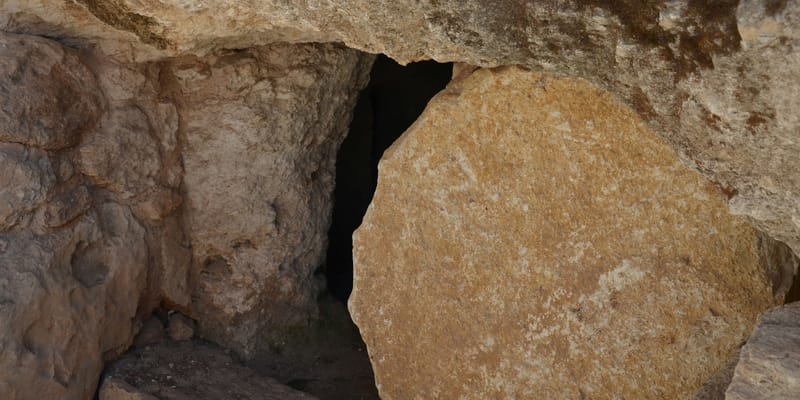
Joel: Because they were convinced by the resurrection.
We keep coming back to this in our Acts series because it's foundational. If Jesus Christ rose from the dead, then everything he claimed about himself, and everything the Bible says about him, is true—even when it doesn't fit our preconceived ideas.
A classic example is Saul in Acts 9. There was hardly a more devout Jew than Saul. He's travelling from Jerusalem to Damascus to persecute Christians because he's appalled by what he sees as the blasphemous claim that God became man and died on a cross. That simply doesn't fit his understanding of God.
Then, on the road to Damascus, the risen Christ appears to him. Saul asks, "Who are you, Lord?" If the answer had been, "I am the God of your fathers—the God of Abraham, Isaac and Jacob," Saul would have rejoiced. Instead, the voice says, "I am Jesus, whom you are persecuting."
At that moment, Saul has to recognise that the whole foundation of his worldview is wrong. Whatever assumptions he held about the nature of God, the purpose of the sacrificial system, or the Christian message itself, all of those objections collapse because the risen Jesus is standing before him.
That's relevant for us today as well. People may not wrestle with questions about the Levitical sacrificial system, but they do wrestle with suffering, pain, and why God has ordered the world the way he has. They may feel they haven't received satisfying answers from Christians or from the Bible.
Those questions matter, and the Bible does speak into them. We've tried to address them in other episodes. But if Jesus Christ rose from the dead, then Christianity is true. The resurrection changes everything. It means we don't judge Christ by our assumptions; instead, we allow the resurrection to reshape them.
Stephen: The Jews are also, in the book of Acts, not only the first Christians but the primary persecutors of the early church. That really reinforces your point.
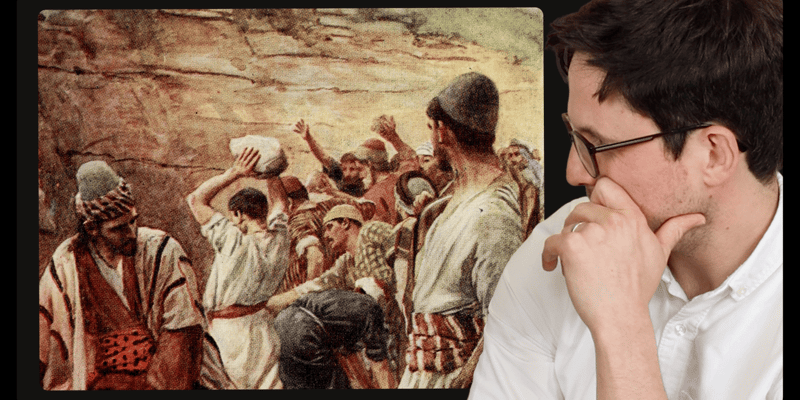
As Saul begins his missionary journeys, he's constantly opposed by Jewish leaders who reject his message because they regard it as outright blasphemy. Throughout Acts you see the same pattern repeated. They plot against him, stir up crowds, provoke riots, and even organise attacks on Christians. At one point they assault the house of a believer, and when Paul eventually returns to Jerusalem they try to kill him and begin beating him.
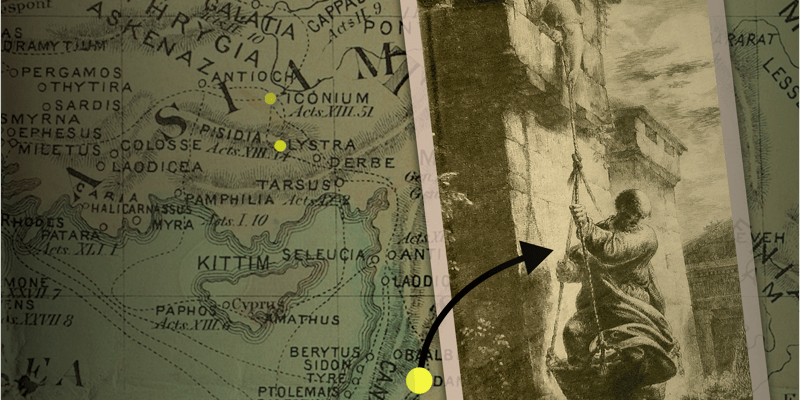
The overall picture in Acts is that these were not people eagerly waiting for new religious ideas or easily persuaded by impressive claims. They're nothing like the people of Lystra, who see Paul and Barnabas heal a man and immediately try to worship them as gods, calling them Jupiter and Mars.
The Jews are deeply offended by the claim that a man could also be God.
Joel: Absolutely. The Greeks and Romans had their own objections to the gospel, but the basic idea of people worshipping a man as divine wasn't completely foreign to them. From their philosophical perspective, it wasn't obviously impossible.
For the Jews, though, it was. There was no group more sceptical of the Christian message at the outset.
And yet, because Jesus Christ rose from the dead, many of them were convinced. That was the turning point. It was true for the thousands who believed at Pentecost, and it was true for Saul of Tarsus.
Ultimately, that should be the thing that convinces us as well.