
Even though American Statesman, Benjamin Franklin, famously wrote “. . . in this world nothing can be said to be certain, except death and taxes”, in my lifetime some people have avoided paying taxes but none have escaped death. It is a subject we don’t like speaking about or even considering, yet it seems there is a sad inevitability about it, as death brings a separation that causes sorrow and grief.
All of humankind, rich and poor, young and old, are affected by death.
Death is real, and no man or animal can defeat it, but it does have a master. In John chapter 11 we are taught vital lessons about death. The main one is that Jesus reigns over death.
As indicated at the start of this series, I believe that this is the seventh and concluding sign performed by the Lord Jesus that John has recorded in his Gospel.
Report received
When the Lord Jesus receives the report: “Lord, behold, he whom You love is sick” (John 11:3) we might expect Him to immediately heal from a distance or commence a journey to Lazarus’ home in Bethany. Interestingly, He takes neither option, instead He declares that “This sickness is not unto death, but for the glory of God, that the Son of God may be glorified through it" (John 11:4). Jesus stayed and was inactive regarding Lazarus at that point because the purpose of what would happen went far beyond the lives of His three friends. The Lord Jesus knew that in a few days a large crowd would see Him raise Lazarus from the dead. Whilst there would be short-term grieving and tears for Lazarus’ family there would be a great work done that would glorify God. After some confusion in the mind of the disciples, the Lord Jesus confirmed that Lazarus was indeed dead and that raising him would further belief in Him, “And I am glad for your sakes that I was not there, that you may believe. Nevertheless let us go to him” (John 11:15). It is important to note that He did not say He was glad that Lazarus had died, but He was glad He had not been there. As a result He could reveal to His disciples His life-giving power that would bring glory to God and build up their faith.
This sign, recorded by an eye-witness, would initiate belief in Him, both then and throughout the centuries to come.
It is worth pondering that tragic events in the lives of present-day believers can be used by God for His glory. Although we frequently do not understand why things happen, we can rest in the truth that God is sovereign and will use them for His purposes.
Deity and humanity displayed
When the Lord Jesus comes to Bethany it is Martha who goes out to meet Him first as Mary stays at the house. However, they both make the same statement when they meet the Lord:
"Lord, if You had been here, my brother would not have died . . .” (John 11:21b and 32b).
The differing reactions to these same statements bring before us the deity and humanity of the Lord Jesus.
Martha is taught about His deity, and the resurrection and life-giving power residing within the Lord:
Jesus said to her, “I am the resurrection and the life. Whoever believes in me, though he die, yet shall he live, and everyone who lives and believes in me shall never die. Do you believe this?” (John 11:25-26 ESV).
We can break this astounding declaration and consequential question into four components.
1) A statement about Himself: “I am the resurrection and the life.” This “I AM” statement informs us that it is the presence of Jesus Christ that brings resurrection and life; therefore, without Him there is no resurrection to life The Scriptures promise that faith in Jesus Christ raises us from spiritual death caused by sin (Ephesians 2:1–10) and imparts to us everlasting life (John 3:36), elsewhere described as abundant life (John 10:10).
2) A promise that those who trust in Him can be assured of a physical resurrection to life: “Whoever believes in me, though he die, yet shall he live.” This great promise assures believers that physical death for them is temporary, like sleep for the body, until the resurrection, when they will be raised and glorified (1 Corinthians 15:42-44). The spirit of the believer who dies immediately goes to enjoy the presence of the Lord (Philippians 1:23).
3) A promise that if you have spiritual life through faith in Him, then you will never experience spiritual death: “everyone who lives and believes in me shall never die.”
The Scriptures also speak of a second death, an eternity separated from God with no hope of forgiveness and reconciliation. Those who have trusted in Christ and partake of eternal life will never experience this second death (Revelation 20:6).
4) A question about personal belief: “Do you believe this?” There is a world of difference between knowing the truth and believing the truth. All who have trusted in Christ as their Saviour and confessed Him as their Lord can have great comfort in knowing and enjoying Him now and forever. Martha’s faith is deepened through her encounter with the Lord and this shapes her enjoyment of Him.
Then, in the Lord’s reaction to her grief, Mary is reminded of His humanity:
“Jesus wept” (John 11:35).
The Lord’s silent weeping graphically displays the humanity of the One who entered this sin-cursed world. He wept with those who wept, knowing the pain and grief that sin brings. We can be assured that the Lord not only knows how we feel but has experienced the pain we have in these times.
One of the great comforts a believer has is knowing that there is a glorified Man in heaven today. He is our merciful and faithful High Priest, and we may come to the throne of grace and find all the gracious help that we need from Him, because He fully understands life on earth, having lived here (Hebrews 4:14–16).
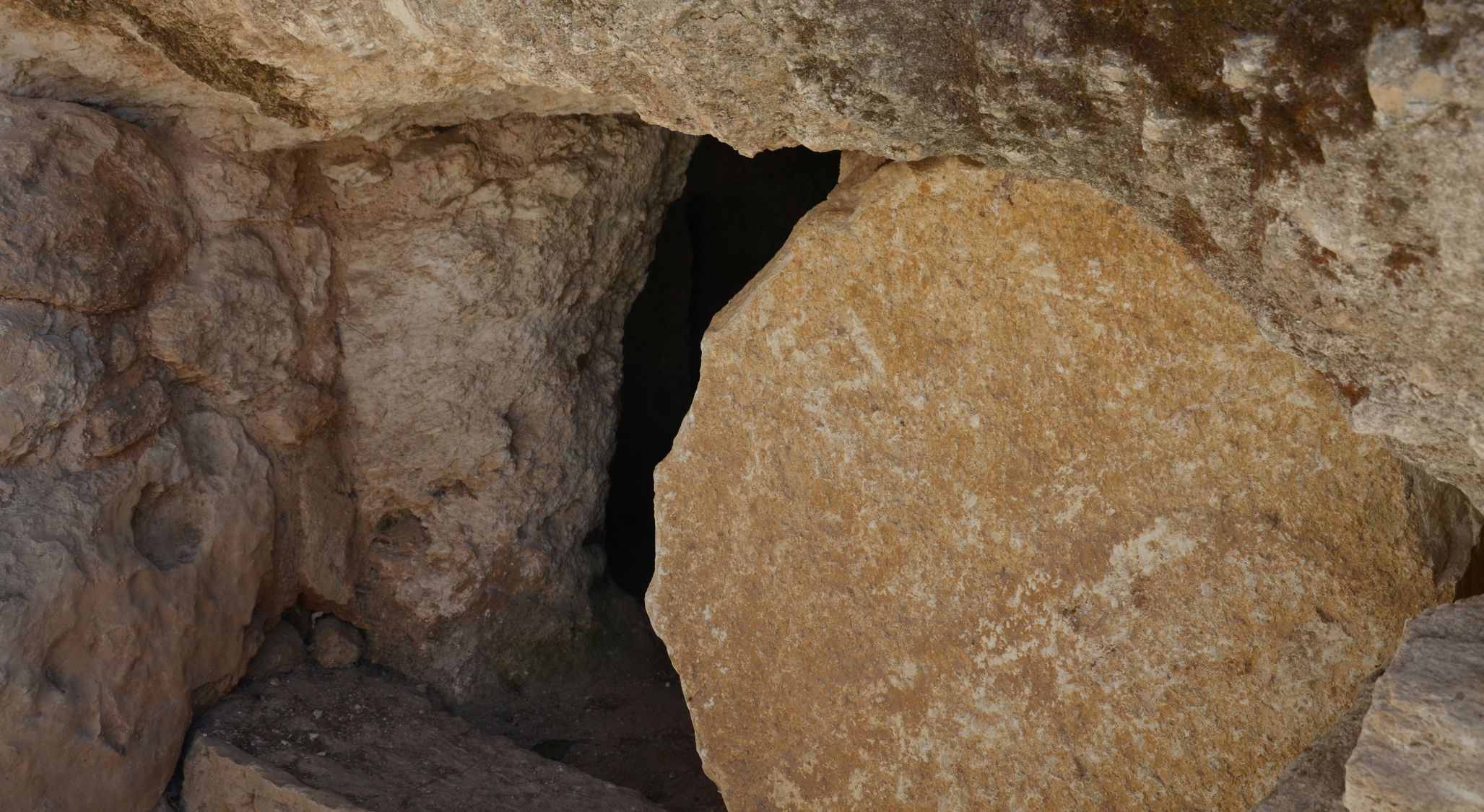
The anticipation and excitement would have been palpable in the large crowd that gathered at Lazarus’ tomb. Most of them would have been present four days earlier when his lifeless body was placed there. Maybe the very men who had carried it in were the ones who rolled the stone away,
Sign given
After the stone was rolled away Jesus spoke to His Father in audible prayer. “It was a public affirmation of Jesus’ mission and unity with the Father, which would soon be authenticated by the raising of Lazarus.”[1]
"Father, I thank You that You have heard Me. And I know that You always hear Me, but because of the people who are standing by I said this, that they may believe that You sent Me” (John 11:41b-42).
In three short words the Lord Jesus issues a personal and specific command.
“Lazarus, come out” (John 11:43c ESV).
No one else in the crowd would have dared utter such words. Unless the speaker had the authority and ability to raise the dead it would seem to be a callous joke played on those who were grieving and mourning the loss of their loved one.
As dead people cannot respond to any instructions, obedience to Jesus’ word would only be possible if life was first given to Lazarus. This is exactly what happened. Lazarus did not need a second charge. He responded to the call of the Lord Jesus and came out of the tomb. Interestingly, John gives no details of the immediate reunion with the family or the reaction of the crowd. We are left to marvel at the power and compassion of the Lord Jesus.
The experience of Lazarus is a great illustration of what happens when a sinner comes to faith in the Lord Jesus Christ. Lazarus was physically dead, and all sinners are spiritually dead (Ephesians 2:5), unable to respond to the Lord. Just as Lazarus was not “slightly” dead, no one is “slightly” spiritually dead.
Before Lazarus could respond to the call of God, he had to be given life. Similarly, the sinner, who is dead in trespasses and sins, needs the regenerating work of the Holy Spirit within them before they can respond to the call of God. Once the dead are given life, they can respond and place their faith in the Lord Jesus. All who trust Christ have been given new life and are lifted out of the graveyard of sin (John 5:24).
Sadly, at the culmination of these seven signs we read:
“Though he had done so many signs before them, they still did not believe in him” (John 12:37 ESV).
Jesus’ identity was clear from the evidence, yet many refused to believe. Such hard-hearted unbelief not only separates people from enjoying the one true God through life and eternity, but also brings everlasting punishment for sin.
The concluding commentary on the signs in John’s Gospel is:
“And truly Jesus did many other signs in the presence of His disciples, which are not written in this book; but these are written that you may believe that Jesus is the Christ, the Son of God, and that believing you may have life in His name” (John 20:30-31).
John recorded some of the signs that Jesus performed so you might believe in Him and have life. As we conclude our look at them I will ask one question:
Are you trusting in the Lord Jesus, as your Saviour, and enjoying eternal life through Him?
[1] John F. MacArthur Jr., John 1–11, MacArthur New Testament Commentary, Chicago: Moody Press, 2006, p.474.