Surprisingly, the answer is the first complete English translation of the New Testament made directly from the original Greek. William Tyndale’s vision was that English-speaking people would have a copy of the Bible in their own language so that they could understand God’s Word for themselves, rather than relying on what could be erroneous teaching by the Church authorities based on the Latin.
Tyndale’s passion for translating the Scriptures into English was met with great hostility. On one occasion, when debating with a Church official who argued that it would be better to have the Pope’s word than God’s law, Tyndale famously replied, “I defy the pope and all his laws; if God spare my life, ere many years I will cause a boy that driveth a plough to know more of the Scripture than thou dost.”
Tyndale was born around 1494 into a wealthy cloth-trading family based in Gloucestershire. The family’s connections with traders in London would serve him well in later years, helping him fulfil his desire to bring Bibles into England. Looking back, we can see the providence of God in those family connections.
Around 1506 Tyndale began studying at Oxford University where he spent about nine years. He was an exceptionally gifted scholar who mastered Greek and Latin as well as other languages. He later studied at Cambridge University, where students read the works of Martin Luther, whose teaching helped revive the biblical truth that justification is through faith alone in Christ alone. In 1521, after the University’s Chancellor ordered the public burning of Luther’s books, Tyndale returned to Gloucestershire, where he worked as a tutor to the family of Sir John Walsh.
Although he was an exceptionally gifted academic with a relatively comfortable life, Tyndale did not shut himself away, but fervently and regularly preached the gospel. In 1523, his request to translate the Bible into English was denied by Bishop Cuthbert Tunstall. Undeterred, he turned to trusted contacts who would help him fulfil his God-given task of bringing the Scriptures to the English people in their own language.
Believing he could not safely carry out his work of translating the Bible into English while remaining in England, Tyndale fled to Germany in 1524 to complete the task. The first complete English translation of the New Testament from the original Greek was printed in 1526. This amazing work, which would have a lasting impact on many people, was completed in Worms, Germany. Copies were then smuggled into England, using the trading contacts established many years earlier through the family business.
The effect of reading Tyndale’s English translation was dramatic. For the first time, people were able to read the Scriptures for themselves. John Foxe (1516-1587), best known for his book commonly called Foxe’s Book of Martyrs, described the arrival of Tyndale's English New Testament in England as “a door of light” opening the eyes of a nation that had previously been “shut up in darkness”.[1]
One life-changing example of Tyndale’s work is the fact that the Greek word for “repent” had been translated as “do penance” for over one thousand years. The Roman Catholic Church taught that, in addition to genuine sorrow for sin and confession to a priest, penitents were required to perform prescribed acts, such as prayer, fasting, almsgiving and other works of charity, in order to make satisfaction for the temporal punishment remaining due to sin, even after its guilt had been forgiven. However, Tyndale’s use of the word “repent” conveyed the truth of the biblical call to a change of heart and mind, turning from sin to God – a change that should be evident in a person’s life.
The delight of the English people who received Tyndale’s translation was in sharp contrast to the hostile reaction of the Catholic Church.
In the early 1530s Tyndale’s household was infiltrated by a man called Henry Phillips. He was paid to find Tyndale, befriend him, and then betray him to the authorities who would arrest him. Once Tyndale was arrested, he was imprisoned, tried and sentenced to death. His crime: opposing the ecclesiastical authorities by translating God’s Word into English so that the common people could read and understand it.
Foxe writes that Tyndale demonstrated the authenticity of his Christian faith even while imprisoned. His description highlights two features:
1. Foxe writes, “Such was the power of his doctrine”.[2] Tyndale continued speaking about the Christian faith to those around him despite his imprisonment.
2. Foxe pairs his doctrine with “the sincerity of his life”.[3] Those who guarded him and lived with him in the castle observed his character closely. In modern English they might say, “If Tyndale was not a genuine Christian, then who could possibly be considered a genuine Christian?”
William Tyndale was executed in 1536 at Vilvoorde, near Brussels, in what is now Belgium. He was tied to a stake, strangled and burned.
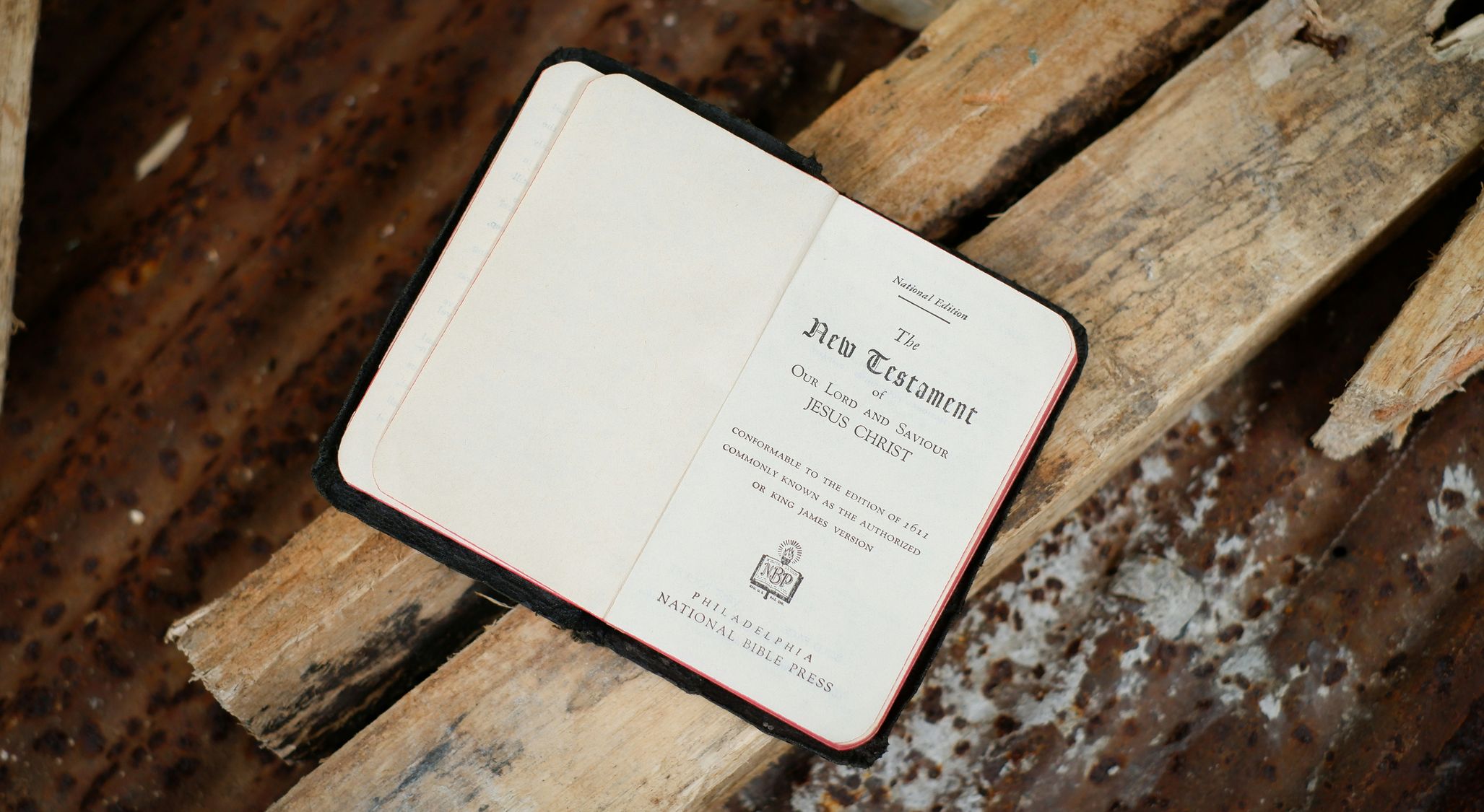
Foxe records that he cried out, “Lord! Open the king of England’s eyes.” That dying prayer was answered when, in 1604, King James I commissioned a new English translation of the Bible. The resulting translation became known as the King James Version (KJV) or Authorised Version (AV). Tyndale's English translation provided the foundation for much of the language of this version. It is often estimated that 80-90 percent of the New Testament wording in the KJV is substantially derived from Tyndale’s translation.
As a servant and martyr of Christ, Tyndale left a mighty legacy. Nearly 500 years after his death, countless believers continue to benefit from his faithfulness, courage and dedication to translating the Scriptures.
[1] John Foxe, Foxe’s Book of Martyrs, p.197.
[2] Foxe’s Book of Martyrs, p.200.
[3] Foxe’s Book of Martyrs, p.200.