Stephen: Why is the day of Pentecost such an important part of Christian history, the Christian story?
Joel: Yeah. It's a huge thing. You read through Acts chapter 2, it's a very dramatic day, but it is a day when literally the world changed and things, particularly for Christians, began to operate in a certain way. That has remained the case for the last almost 2,000 years.
I think it's where we see, number one, a lot of Old Testament prophecies. The prophet Joel predicted that God's Spirit would be poured out upon mankind. We're seeing these things come to life because of the death and resurrection of the Lord Jesus. That is now possible.
We're also beginning to see what we've talked about in previous episodes in a somewhat abstract way. We're now starting to see how Christ is going to work through his people in the church age.
Stephen: Yeah.
When you open up Acts chapter 1, the Lord Jesus says to his disciples, as he's about to leave and be ascended to heaven, "You shall receive power, after which you shall be my witnesses in Jerusalem and Judea and Samaria and the uttermost parts of the earth."
Whatever they're going to receive, the Spirit is going to be the key to them being witnesses. The days pass, they wait, and eventually this day comes. The day of Pentecost arrives and these early Christians are together in a room when suddenly there's this rushing wind from heaven that fills the house they're in. These cloven tongues of fire appear upon their heads and they are filled with the Spirit. They begin to speak in tongues, or foreign languages.
Suddenly we have this scene in Acts chapter 2 where the city is filled with Jews from all parts of the world who are there for the feast of Pentecost. They hear these men speaking in the power of the Spirit and they say, "Are you drunk?" They look like drunk men, but they're not. They're filled with the Spirit.
Joel: Yeah. It's really interesting that the observation they made was a change in the character of these men that they couldn't explain naturally. The only explanation they could come up with was that these guys are drunk because they spoke with a boldness, confidence and fluency, particularly in languages they hadn't previously learned, that defied natural explanation.
It's really interesting when you come over to the book of Ephesians. The Apostle Paul makes a very similar link. He says, "Don't be drunk with wine, for that is debauchery, but be filled with the Spirit."
Clearly there is a way in which being filled by the Spirit is like being drunk, and there is a way in which it's very different.
It's like being drunk because a person who is drunk is under the influence of something else. Because of the influence of the force that has taken control of them, they lose their fears and inhibitions. Many of our listeners might have experienced this in real life. People are prepared to be more open, more free about the truth. They're prepared to confront situations in life more readily whenever they've had alcohol in their system than when they're fully sober.
Being filled with the Holy Spirit allays a person's fears, social anxieties and inhibitions. They melt away.
But there is a way in which it's a very different thing. Being drunk makes you bold and confident because alcohol suppresses certain parts of the brain and makes you see less of reality. You forget certain problems. You forget the consequences of your actions and that gives a temporary feeling of elation.
The exact opposite is true with the filling of the Holy Spirit. It's not that he makes you see less of reality but actually more of reality.
These men, for the first time, even though they had been with Jesus Christ while he was here on earth, saw things they hadn't seen and understood things they hadn't understood. Filled with and empowered by the Spirit, that disposition is completely changed.
That has been the case. That's what enables a Christian not just to be born again but to continue to live in that new life. It is the indwelling Holy Spirit.
Stephen: We're at the day of Pentecost. These men are speaking in foreign languages. We read of all sorts of countries being represented. All sorts of people hear their own language. They hear the wonderful works of God in their own tongue. People from the Parthians, the Medes, the Elamites, dwellers of Mesopotamia and Judea, Cappadocia and Pontus and Asia, Phrygia and Pamphylia and Egypt and Libya and Cyrene, strangers of Rome.
All these Jews are in Jerusalem. They hear the word of God, the wonderful works of God, in their own language, and it's all because of the Holy Spirit. It's quite the day, isn't it?
Joel: It's remarkable. You nearly think you were speaking in tongues there, being able to go down through that list of names. That was impressive.
It is remarkable and it defies natural explanation. Hence the observers on the day said, "These men are filled with new wine. They're drunk."
But it shows us something very important about what God is doing now as a result of the death of Christ.
It's not the first time in the Bible that we've come across people speaking in languages they hadn't previously known. We looked at this in our first series in the book of Genesis, the Tower of Babel.
In Genesis 11, humanity came together to rebel against God. God moved in judgment and scattered the tribes of the earth by giving them different languages so they couldn't communicate with each other.
Now that is being reversed because of one man's act of obedience and submission to God. Those men sought to exalt themselves to the throne of God. God himself in Christ came down from the throne and went to the cross.
Now, because of that, all of those tribes that were previously scattered are being brought back together again.
One of the wonderful things we see throughout the book of Acts is not only that we're united with Christ and have this intimate, vital union with him, but we're also united with each other.
We live in a divided world, a scattered people who are at war and enmity with each other. The human heart is filled with hatred. But the death of Christ, made real to us through the indwelling of the Holy Spirit, overturns that.
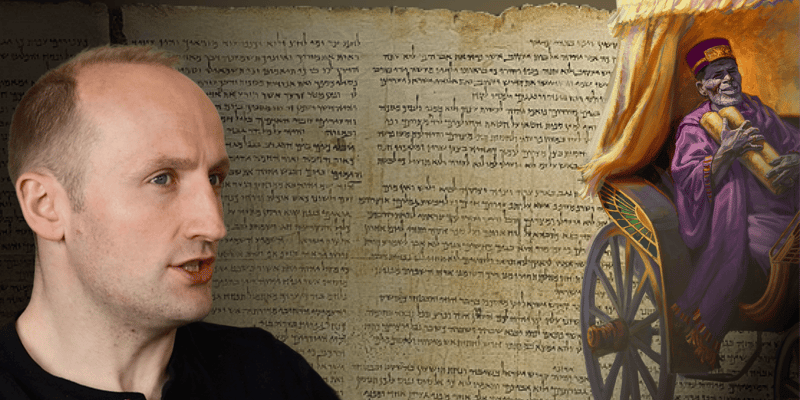
It brings together people who don't naturally belong together. We'll see this in future episodes. In Acts chapter 8 you have a sexually altered African man, the Ethiopian eunuch, and an Orthodox Jewish man, Philip, embracing each other. The world says those two people don't belong together, but what brings them together? The gospel of Jesus Christ and his indwelling Spirit.
There's a passage I find very precious towards the end of the Bible in Revelation chapter 5. We're in the throne room of God and there's a great company of the redeemed gathered around the throne of the Lamb. They sing a new song. They say, "You are worthy because you have redeemed us to God by your blood out of every tribe and kindred and tongue and people and nation."
From all of those people who, because of the rebellion of humanity, were separated and scattered, now by the Spirit of God they're being gathered together again in praise and worship of the Lord Jesus Christ.
Stephen: Yeah. So the day of Pentecost has brought about this incredible one tongue that shares God's gospel. They speak in tongues and immediately after this they are also performing wonders and signs. The end of Acts chapter 2 tells you that, and that will continue.
There's these supernatural works being done that only could be explained by the Lord. What's the significance of that? Why are these special things happening, these out-of-the-ordinary things happening at this stage in Acts?
Joel: I think Paul gives us the answer to that in 1 Corinthians. He says, "The Greeks seek after wisdom but the Jews require a sign."
Because God had revealed himself, because God had spoken directly to the Jewish nation, to the people of Israel in the Old Testament, they required a miraculous sign to believe something was genuinely of God.
This is that.
The gift of tongues specifically here in Acts chapter 2 is to witness to that nation that Jesus Christ really was your Messiah, that he came as your King. You rejected him, and yet now by God's grace, in spite of that, through his death, salvation has been provided.
As we'll see as we go through the book of Acts, it's not just for one nation anymore. It's going out to the entire world.