
“The greatest gift which suffering gave to me was not endurance, explanation, or even relief. It was God Himself.”[1]
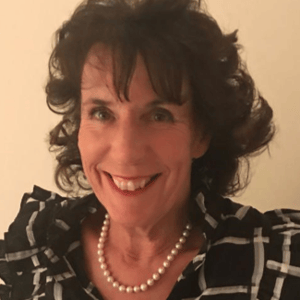
Michelle Moffatt’s death at just forty-four has left a deep ache in the hearts of those who knew her and followed her work. Yet grief is not the only note. There is gratitude too – for many of us, profound gratitude for the way she spent her later years: faithfully, courageously, and with a gentleness that reflected the Saviour she loved.
Through her written articles and her recent UtG Voices interview (see here), Michelle gave the Christian community a rare gift: a voice formed by Scripture, softened by suffering, and strengthened by hope.
I first knew Michelle in her youth. Her parents are fine Christians, and she attended a nearby church. She trusted the Lord Jesus as her Saviour in childhood, but in her UtG Voices interview she candidly recounted, “there was a long time in my life where I was very backslidden and I was walking away from the Lord.” Michelle identified with the hymn, “Years I spent in vanity and pride” – the very hymn we sang at church only a couple of hours before her sudden death.
Following multiple health struggles including alopecia and total paralysis from the waist down caused by an injury she sustained while nursing, Michelle signed up to go to Dignitas, the assisted suicide clinic in Switzerland.
In her UtG Voices interview, Michelle went on to describe how God providentially intervened in those plans. His intervention transformed her understanding of accountability to God, His sovereignty, and the preciousness of her salvation. Truly, the Lord “restore[d] to [her] the joy of [His] salvation" (Psalm 51:12).
Michelle’s personal experience, clear articulation, and distinctive presence made her a powerful advocate for multiple worthy causes, both in the media and at the Scottish Parliament. Most notably, in April 2026, she lobbied against proposed assisted suicide legislation and many believe her contribution had a decisive impact on the bill’s failure.
Over the past five years or so, Michelle’s physical suffering intensified. Her digestive system effectively closed down and in the last year of her life she was fed by tube and was regularly hospitalised with septicaemia. Despite all of this, bitterness did not define her. Nor did self-pity. Rather, Michelle made a deliberate choice to “rejoice in the Lord” (Philippians 3:1), and she was marked by an insatiable appetite for God’s Word.
She frequently travelled to Bible teaching meetings across the wider area, despite her severe mobility issues. She would balance her Bible and notebook on her knees, taking detailed notes and enjoying fellowship. She immersed herself in Scripture and often shared striking insights with me. That is why I encouraged her to come onboard at UtG.
Michelle’s UtG contributions, whether written or verbal, were marked by the underlying reality that she was someone who had walked through valleys and discovered that sorrow does not erase God’s goodness – it can reveal it. Her reflections on prayer and suffering were never abstract. They carried the weight of lived experience.
She had wrestled with pain and found Christ sufficient. She helped others see that suffering, though bitter, can become a place of unexpected grace: a place where God draws near, deepens trust, and teaches His people to rest in His character. To many overwhelmed by hardship, Michelle’s words offered both companionship and direction.
Michelle’s courage was especially clear in her writing on assisted dying as she did not address the issue from a distance. On the contrary, she wrote as a Christian who understood suffering, valued human dignity, and believed deeply in the sanctity of life. In a culture that often treats autonomy as the highest good, she exposed the danger of despair being dressed up as freedom. She reminded us that life is a gift – given, sustained, and redeemed by God – and that the gospel offers a hope stronger than suffering, fear, or death. Her voice was steady, gracious and one of conviction. It was the kind of voice that we continue to need, and one we will therefore miss.
Michelle’s love for Scripture was evident every time she spoke, and was woven into everything she wrote. Her study of Abigail demonstrated her gift for drawing out biblical wisdom with pastoral sensitivity. She traced Abigail’s discernment and courage as she prevented bloodshed and protected David from sin, then applied that wisdom with clarity to modern life. Michelle could take a familiar passage and make readers see it afresh – alive, relevant, and searchingly practical. Her writing did not seek to impress – it sought to illuminate. And it did.
Prayer, too, was a major theme of Michelle’s writings. She wrote about it not as a duty but as a lifeline – a way of aligning the believer’s heart with the will of God. Her reflections urged Christians to pray honestly, persistently, and trustingly, recognising that prayer does not change God’s purposes but rather, changes us.
In her interview for UtG Voices, she demonstrated that the theme of prayer was intensely personal. She spoke with warmth, humility, and quiet strength about her own walk with God. Her voice – gentle, thoughtful – and her words – deeply rooted in Scripture – gave listeners a glimpse of the faith that shaped her life. Prayer was not merely a subject she explored. It was a practice she lived.
Michelle’s contributions to UtG never failed to combine theological clarity with pastoral tenderness. She wrote with conviction, but never with harshness. She spoke truth, but always with grace. Whether addressing suffering, ethical dilemmas, biblical wisdom, or prayer, she did so with steady confidence in the gospel’s power to comfort, correct, and transform. Her work was a gift to the church – especially to the weary, the confused, and the burdened. Her death at forty-four feels painfully premature. Yet her legacy is unmistakably bright.
Michelle used her years well. She strengthened believers. Comforted the hurting. Defended life. Illuminated Scripture. Encouraged prayer. Above all, she pointed people to Christ. Her voice – quiet, courageous, compassionate, and full of hope – continues to bless us via UtG archives. She is now with the Lord whom she loved. But her words remain – still guiding, still comforting, still pointing us to her Lord and the gospel that shaped her life.
My favourite story about Michelle comes from hospital. A doctor, noticing her reading a sizeable Bible commentary, expressed some sympathy, and asked, “Have you not got anything better to read?” Michelle replied, “Yes! I have my Bible here!”
Personally, I learned much from Michelle. For her faithfulness, her wisdom, and her witness, I give thanks to God.
[1] Michelle Moffatt, Why a good God allows suffering and why I am thankful for it, see here