
My husband was amused to hear that they all agreed with me that one of the worst parts of the book was “the waiting place”. My lack of patience is a long-standing joke between us, with my husband often commenting on my aversion to turning up early to anything (admittedly a rare occurrence to begin with!) as I then sit fidgeting and wondering what I could have squeezed into those spare few minutes. It seems I am not alone, however, in wanting to get as much done as possible as fast as possible. We live in a world now where, thanks to technology and companies like Amazon, we can access food, clothing, entertainment and more within hours or even minutes, and all at the touch of a button. Everything aims to be quicker and easier than it was before – in our fast-paced western lifestyle the possibility of waiting is almost unbearable.
So, imagine my dismay when, a few months ago, I found myself stuck in my own unique “waiting place” – a diagnosis which has meant continually waiting on blood tests, scans, appointments and treatments. Even as I write, I am waiting on my body to recover and to receive results and next steps from my doctors. It seems unlikely to be a coincidence that throughout this period God has brought to my attention Bible passages, and people, also characterised by waiting. Once I began to think about the subject properly, I realised the Bible is full of the idea of waiting. This is perhaps unsurprising as, ultimately, the Bible tells the story of how God will redeem the world He created. The book of Romans reminds us this story is still not complete; we are all waiting for the ending:
“. . . the whole creation has been groaning together . . . And not only the creation, but we ourselves . . . groan inwardly as we wait for . . . the redemption of our bodies” (Romans 8:22-23 ESV).
Think of just a few key characters and moments in God’s story of redemption and you will find them waiting. Abraham, plucked from obscurity by a sovereign God to become the father of a great nation, waited many years for the promised son that would begin that family (Genesis 12:1-4; 21:1-5). David, divinely appointed to be king over that same nation, waited through years of terrifying persecution before he finally reigned upon the throne, prompting him to write words such as these:
“I wait for the Lord, my soul waits, and in his word I hope” (Psalm 130:5 ESV).
Sadly, David’s descendants led God’s people into idolatry, which resulted in them being exiled from their promised land, yet throughout their exile God sent messengers reminding them to repent and wait in hope for restoration, using words such as these:
“. . . they who wait for the Lord shall renew their strength; they shall mount up with wings like eagles; they shall run and not be weary; they shall walk and not faint” (Isaiah 40:31 ESV).
The ideas of waiting and hoping are often closely linked in the Old Testament, particularly as two of the Hebrew verbs for waiting, “qavah” and “yahal”, can also be translated “hope, look for, expect”.[1] This is not a passive process but one we actively participate in, as scholars explain:
“Waiting in Scripture is never passive resignation; it is faith stretched toward the sure character of God . . . the spiritual posture of expectancy.”[2]
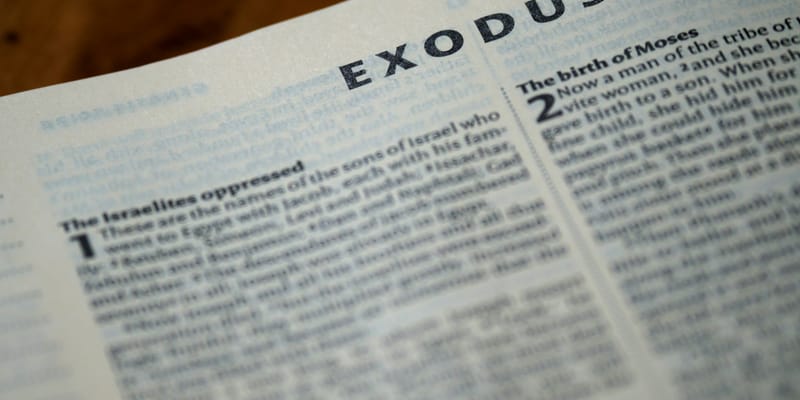
We often view waiting as “dead time” between periods of activity but for many characters in the Bible their time of waiting marked the part of their life where their faith was strongest. Joseph is one such example, waiting faithfully for God to act whilst in Potiphar’s house and then in the prison (Genesis 39 and 40); Moses is another – waiting for 40 years in the desert of Midian herding sheep (Exodus 2) was necessary to temper him from the impulsive prince, who rashly murdered an Egyptian, to the “meekest man” (Numbers 12:3), who patiently led a grumbling people through the wilderness. Tragically, Moses also demonstrates that even those who have waited patiently on God throughout their lives can still fall at the final hurdle – as his heated words to the people at the rock in Kadesh Barnea show (Numbers 20:10).
So what makes the difference between waiting well and giving up or, worse still, blowing up? Again the Hebrew word qavah may give us a clue, as its literal meaning (to bind together) implies “deliberate, tension-filled waiting that binds the heart to the expected intervention of Yahweh.”[3]
When challenging circumstances come (or long-prayed-for answers don’t) and we find ourselves in a waiting place, this image of cords wound together to form a stronger rope is essential. We cannot wait well alone. We must cling to God. We must entwine ourselves with Him or we run the risk that we will snap. But perhaps we also need to consider the possibility that God intends our lives to be enmeshed with other Christians as we wait, too? For those of us prone to stoic independence, opening ourselves up, particularly when we are in a vulnerable, helpless position, can be a daunting prospect. Likewise, for those of us looking on, it can be hard to know how best to help someone who is going through a trial. The book of Job perhaps gives us some guidance:
“They made an appointment together to come to show him sympathy and comfort him . . . And they raised their voices and wept . . . And they sat with him on the ground seven days and seven nights, and no one spoke a word to him, for they saw that his suffering was very great” (Job 2:11b-13 ESV).
Many who have read the whole book would argue his three friends should have stopped there! Yet, for all their faults in the remainder of the story, isn’t there something beautiful about the fact they mourned with their friend and showed solidarity simply by sitting silently next to him? How many of us are willing to sacrifice time and effort to just quietly draw alongside someone, perhaps without much recognition for our effort? And how many of us are humble enough to accept help and companionship, sometimes from the unlikeliest of sources, when we are in difficulty? Whilst the waiting place can be a place of uncertainty, it can also be one of unity and a place where, as the next article will hopefully show, we are drawn closer to our God as we learn to wait on Him.
[1] Strong's Hebrew: 6960. קָוָה (qavah) – to wait, to look for, to hope, to expect
[2] Ibid.
[3] Ibid.