
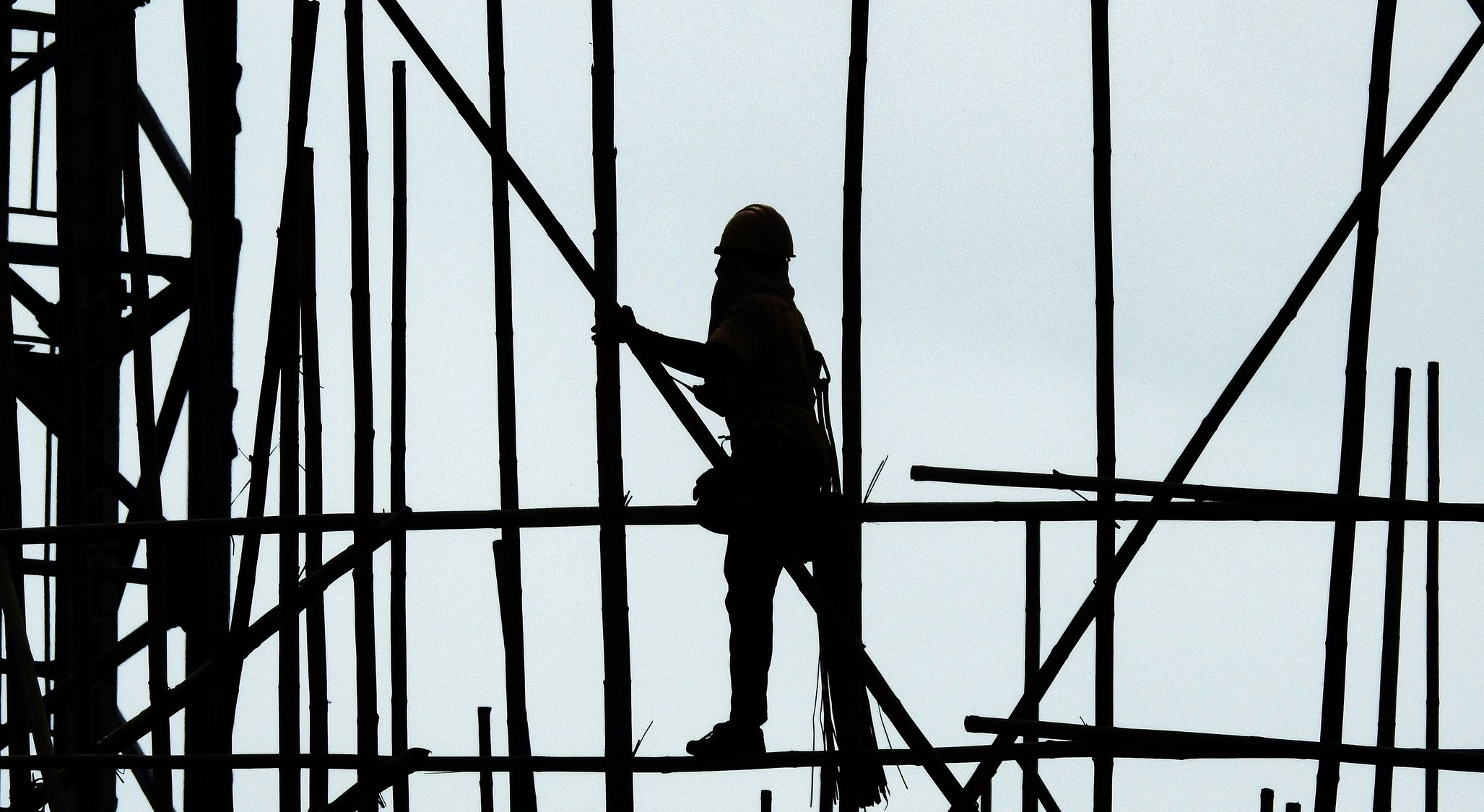
First and Second Chronicles fall into the latter category for me, so it was a pleasant surprise to discover a female character I had never noticed before as I plodded through several chapters of genealogies one morning:
“The sons of Ephraim: Shuthelah, and Bered his son, Tahath his son, Eleadah his son, Tahath his son, Zabad his son, Shuthelah his son, and Ezer and Elead, whom the men of Gath who were born in the land killed, because they came down to raid their livestock. And Ephraim their father mourned many days, and his brothers came to comfort him. And Ephraim went in to his wife, and she conceived and bore a son. And he called his name Beriah, because disaster had befallen his house. His daughter was Sheerah, who built both Lower and Upper Beth-horon, and Uzzen-sheerah” (1 Chronicles 7:20-24 ESV).
A quick search revealed that these first two cities feature several times in the Old Testament. They are recorded as being in the territory of Ephraim and also in the Levites’ inheritance (1 Chronicles 6:68; Joshua 21:22). They were the site of one of Israel’s most miraculous victories where God rained hailstones on their enemy and then stopped the sun to allow Joshua’s army to defeat the remainder (Joshua 10:10-13).
Finally, Solomon is recorded as strengthening the towns in 2 Chronicles 8:5; scholars suggest this was due to their strategic position on the “ascent of Beth-horon” – an essential route from the coast to the hills for both trade and defence[1]. Yet, whilst her cities became known as hubs of economic, spiritual and military activity, Sheerah, their builder, disappears from Scripture after just one verse. The first lesson Sheerah teaches us then is . . .
The humility involved in building
Sheerah is far from the only example of a Bible character who did not live to see the full extent of their legacy. David, despite faithful service as king, was not permitted to build a house for the Lord as he had intended (2 Samuel 7). However, the fact that the completed temple in all its glory would be attributed to his son Solomon did not deter him from humbly preparing all the materials for it at great effort and expense to himself. Similarly, I suspect Sheerah built her cities not for fame or notoriety but to provide stability for a future generation, some of whom perhaps did not even appreciate what she was doing for them at the time.
Much of the work that Christian women are involved in – raising and teaching children, advising younger or less experienced women, visiting those who are older, sick or struggling, supporting husbands and/or church leaders in prayerful and practical ways – will not gain us much human recognition but has the potential to gain us a heavenly reward. As with Sheerah, building those cities bit by bit, many of these works are time-consuming, progress can seem slow and appreciation minimal! But just as Sheerah likely never knew how the humble settlements she began influenced Israel’s history, none of us know how God may use the services or people that we have poured our efforts into in the future. Which brings us to . . .
The necessity of building
Above all else, the story of Sheerah and her family demonstrates that building is a necessity in the Christian life. God had commanded the people to “possess the land” (Deuteronomy 1:8), yet Sheerah’s family faced some huge obstacles to fulfilling this command. The passage in 1 Chronicles indicates that an incident with their enemies had resulted in the death of almost all the males in her family. Born after this tragedy are Beriah (“in trouble” or “in evil”[2]) and Sheerah (“a remnant”[3]), whose names illustrate the seemingly hopeless situation the once fruitful tribe of Ephraim found itself in. The fulfilment of God’s plan seemed to be resting on her so, with His help, she had to start building.
Sometimes we find ourselves in circumstances we did not expect: bereavements, ill health, family disappointments, financial trouble, church problems . . . the list of potential disasters that can affect us goes on and on. Yet we too are workers and part of God’s “building” (1Corinthians 3:9) so even if the relationship status, job, family and church you’ve been placed in is not what you would have chosen, God has chosen you for it – get stuck in and build!
Sheerah didn’t build half-heartedly, she was conscientious – she built: on high ground to see enemies coming; near a busy thoroughfare that would provide essentials for her family; living alongside godly Levites who would hopefully be a spiritual example to her descendants.
Likewise, we can share God’s Word with our children, our Sunday school classes, and our Christian friends, so that we are all armed for whatever attacks we may face; we can build up our spouses, families and those closest to us with encouraging words and with our prayers; we can get involved in whatever activities at church need support; we can reach out to lonely colleagues and neighbours with the good news that God wants to welcome them into His family and ours. All of which sounds uplifting and inspiring, so perhaps it’s time to mention . . .
The difficulty of building
There were likely already Canaanite settlements in the areas which would come to be known as Upper and Lower Beth-horon. Sheerah’s job wasn’t building from the ground up but reinforcing what was already suitable and removing what was of no use. In some ways, though, rebuilding can be harder than starting from scratch, as the Israelites learned when they returned from exile:
“The strength of those who bear the burdens is failing. There is too much rubble. By ourselves we will not be able to rebuild the wall” (Nehemiah 4:10 ESV).
Some of us know what it’s like to have God permit a bulldozer into our lives, whilst for others it’s a slow and stealthy crack here or crumble there. Either way the result is the same – too much rubble. Twenty-first century life, with its social media, online streaming and smartphones, has the potential to distract and derail us all from building something lasting for God. And then there are the personal discouragements and character flaws unique to each of us that will mean we sometimes find the work hard, or need to revisit what we have built to ensure it’s still steady.
We can renew our energy for building by removing whatever prevents us from dwelling on truths in God’s Word, and by enjoying God’s presence, both of which will safeguard us from pitfalls (Philippians 3:1). Sheerah must have had to cling to God and His promises as she secured stones and dragged debris along steep paths in the middle-eastern heat. God knows that our greatest need as we build is always His presence, as His response to the exiles mentioned above shows:
“‘. . . Be strong . . . Work, for I am with you,’ declares the Lord of hosts” (Haggai 2:4 ESV).
Whilst we are not explicitly told that Sheerah was accompanied by any others, God graciously gave the exiles not only Himself but also each other to depend on, which helps us remember . . .
The unity required for building
The fact that Sheerah, rather than her male relative Beriah, is acknowledged as the builder of Upper and Lower Beth-horon, perhaps suggests a disappointing lack of helpers to share the burden with her. Although Scripture features many faithful individuals, it is clear that God (who Himself consists of three Persons working perfectly together) values human relationships. We see it: in creation when He declares a companion is necessary for Adam, and then walks in the garden with Adam and Eve; in His promise to Abraham and Sarah that they would experience the fulfilment of family; in His willingness to dwell amongst the nation that sprung from that family. Finally, in the New Testament, we see God’s design for fellowship in a fresh and specific way – the church – described in Ephesians as being:
“built on the foundation of the apostles and prophets, Jesus Christ Himself as the [chief] Cornerstone, in whom the whole structure is joined together, and it continues [to increase] growing into a holy temple in the Lord… In Him [and in fellowship with one another] you are also being built together into a dwelling place of God in the Spirit” (Ephesians 2:20-22 AMP, emphasis mine).
Throughout Scripture, then, the message is plain – God intended for us to unite together in order to live, serve and build unto Him. Even if Sheerah did most of her building work alone, the location of her cities (close to trade and defence routes) shows she understood the importance of interdependence on others.
This is a particular strength of women: to build networks and communities wherever we find ourselves; to share experience, advice and biblical wisdom so that we can learn from, support and encourage each other. We won’t all have the same circumstances, approaches or personalities, and that’s ok – we’re not called to uniformity but to unity, to togetherness. So don’t assume you have all the answers; seek out Christians in your church who can guide you. Don’t pull back or think you’ve nothing to offer; there might be an isolated individual who needs somebody like you to draw alongside and build them up, and together we become a dwelling place of God – could there be a higher calling? Which ultimately reminds us of . . .
The gravity of building
Sheerah knew her task was a serious one – her family had almost been wiped out, so to ensure lasting security meant she had to build well. Her hard work paid off with both Upper and Lower Beth-horon becoming sites of great victories as recorded in the Old Testament, whilst experts believe towns still exist on these spots to this day1 showing her legacy has indeed stood the test of time. All we have spent our lives building will also be tested as Paul explains to the Corinthian Christians:
“Now if anyone builds on the foundation with gold, silver, precious stones, wood, hay, straw – each one’s work will become manifest, for the Day will disclose it, because it will be revealed by fire, and the fire will test what sort of work each one has done. If the work that anyone has built on the foundation survives, he will receive a reward. If anyone’s work is burned up, he will suffer loss . . .” (1 Corinthians 3:12-15 ESV).
We are all spending our lives building into something. Let’s hope that first of all we are building into the right things, things that last – our personal relationship with God, our churches and our families. Secondly, however, are we building into these things for the right reasons? We can’t know what motivated Sheerah most. Was it protecting her family from danger? Was it personal recognition and fame? Was it bringing pleasure to God by obeying his command to possess the land?
We are not always very good at assessing our own motives either, but God is. Perhaps achievements and works we think are important and will have lasting significance were actually done out of pride or duty or rivalry and we will one day watch them burn without a trace. Conversely, there may be words, actions or even prayers we enacted humbly and quietly and for the sake of others and we thought they went unnoticed but our Lord saw them, was pleased by them and will reveal their significance to us at His judgement seat. May the possibility that we will have built up even a miniscule mound of treasure to present to Him keep us building day-by-day . . . just like Sheerah.
[1]https://biblehub.com/topical/b/beth-horon.htm