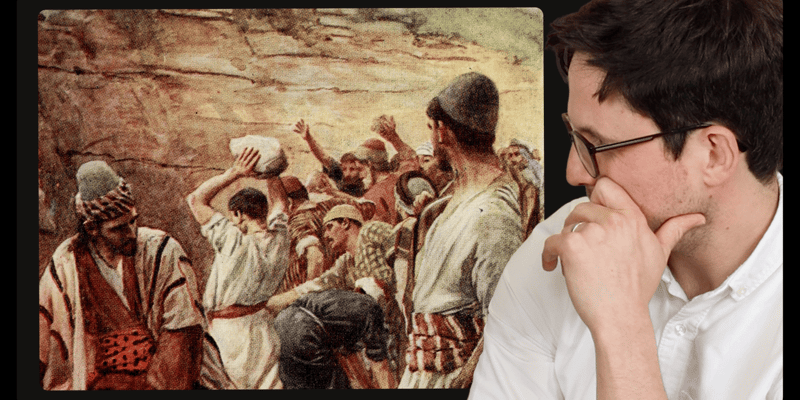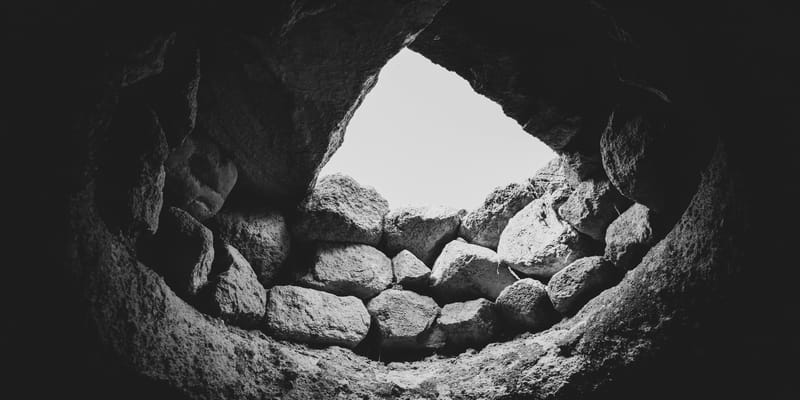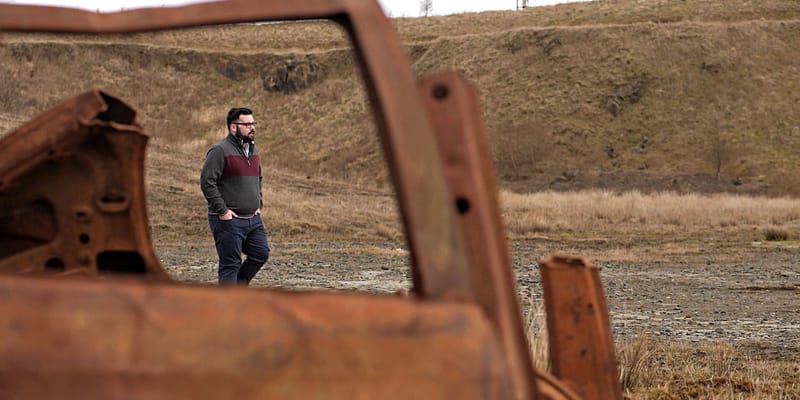

In Psalm 103:12, our sins are removed “As far as the east is from the west.” In Isaiah 38:17, God casts them “behind [His] back.” And in Micah 7:19, He throws them “Into the depths of the sea.”
Each picture captures a different shade of the same truth: when God forgives, He does so completely. Our sins are not just pardoned; they are gone – distanced beyond measure, placed out of sight, and buried beyond retrieval.
Together, these images form a portrait of divine mercy that speaks to both the mind and the heart. They invite us to imagine what words can barely express – that through Christ God’s forgiveness is full, final, and freeing.
He doesn’t keep our sins on record. He doesn’t glance at them “out of the corner of His eye”. He doesn’t store them somewhere to revisit later. In the language of Scripture, He removes them infinitely, hides them lovingly, and buries them permanently.
And that is the heart of the gospel: God chooses not to remember what Christ has already removed.
There is a quiet wonder when contemplating that God – who knows all things – chooses to not remember something. This is not a lapse in memory; it is a decision based on His love. Scripture paints this truth again and again: when God forgives, He no longer remembers. Not in the human sense of losing track, but in the divine sense of no longer holding our sins against us.
1. As Far as the East Is from the West
“As far as the east is from the west, so far does he remove our transgressions from us” (Psalm 103:12 ESV).
This verse from the Psalms gives us one of the most beautiful images of forgiveness in the Bible. The east and west never meet, because they are directions on a horizontal plane that go on forever; they stretch into infinity. If you travel north, you will eventually reach the North Pole – and once you pass it, you are heading south. North and South have fixed points, but if you travel east, no matter how far you go, you will never “arrive” at west. You just keep going east endlessly around the globe.
That is how far God separates our sin from us. The picture is not of our sin trailing behind us, threatening to catch up, but of complete distance – a vast and unbridgeable gap created by God’s mercy.
For believers, this means that when we confess our sins to God, we don’t need to live in fear of them following us. They have been sent away – carried off, never to return.
2. Cast Behind His Back
“. . . but in love you have delivered my life from the pit of destruction, for you have cast all my sins behind your back” (Isaiah 38:17 ESV).
Hezekiah’s prayer of thanksgiving shows a heart that knows the relief of divine forgiveness. God does not keep our sins before His face as a reminder of our failure; instead, He casts them behind His back. What a tender image of grace – God turns His gaze away from our guilt because His eye is fixed on His redeemed children, “those who fear Him . . . those who hope in His mercy” (Psalm 33:18).
In biblical imagery, whatever is “before” God’s face is in His view and under His attention or judgement. To have something “behind” Him means it is no longer something He looks upon or remembers against us.
That is stunning grace. When we sin, we often imagine God turning His back on us, but the gospel reveals the opposite: because of His mercy, He turns His back on our sin.
The Tenderness of Divine Mercy
The phrase “behind [His] back” conveys intimacy and kindness, not indifference. It is the loving act of a Father who refuses to keep a record of wrongs. Just as 1 Corinthians 13:5 says, love “keeps no record of wrongs,” so God’s perfect love in Christ keeps no record of our wrongdoings.
This does not mean God ignores justice; rather, His justice was completely satisfied in the sacrifice of Jesus Christ. If we belong to the Lord Jesus, every one of our sins was fully paid for on the cross and forever removed from us. So now, when God looks at us, there is nothing left to see but the perfect righteousness He has “counted to us” (Romans 4:23-25 ESV). What was once before His face has been carried away and placed behind His back – out of sight – forever.
Behind His Back, Before His Face
Think about the contrast: our sins are behind His back, but we are before His face. The same God who refuses to look at our sin now lifts His countenance upon us in blessing (Numbers 6:24–26). The face once turned away because of our guilt is now turned toward us in grace.
In the Lord Jesus, God has literally reversed the direction of His gaze – sin is behind Him, and we are before Him.
When shame resurfaces or memories of failure try to define you, remember where your sin is – behind God’s back. It is not in His sight, nor in His thoughts, nor in His record. And, He does not turn around to look for it again.
3. Hurled into the Depths of the Sea
“He will again have compassion on us; he will tread our iniquities underfoot. You will cast all our sins into the depths of the sea” (Micah 7:19 ESV).
Micah’s words reveal God’s compassion in motion. Not only does God trample our sins underfoot, but He throws them into the deepest part of the sea. They are gone, irrecoverable, out of sight – forever. No deep-sea diver could retrieve them and no storm could wash them back to shore.
How Deep are the “Depths of the Sea”?
To feel the weight of this image, it helps to realize just how deep the sea truly is. The average depth of earth’s oceans is around 12,100 feet – that’s over two miles straight down. But the deepest known point, the Mariana Trench in the Pacific Ocean, plunges to about 36,000 feet (nearly eleven kilometers or seven miles) below the surface.
At that depth, sunlight never reaches. The pressure is more than 1,000 times what we experience at sea level – utterly crushing to anything human. No hand could ever reach down to pull something back up, no diver could survive there, and no submarine could easily reach it.
That is the image Micah wants us to see: our sins are not floating near the surface, waiting to reappear. They are buried in the unsearchable deep, beyond human reach – and beyond divine remembrance.
God’s Mercy Is Deeper Still
When God says He casts our sins into the depths, it is not about geography – it is about grace. The “depths” represent complete finality. The ocean is vast, immeasurable, and untraceable; God’s forgiveness is the same. His mercy does not skim the surface of our lives; it goes to the deepest places of guilt, shame, and brokenness – and covers them entirely.
Speaking of her sins, Corrie ten Boom said: “When I confessed them to the Father, Jesus Christ washed them in His blood. They are now cast into the deepest sea and a sign is put up that says, NO FISHING ALLOWED”.[1]
That’s the gospel truth. When we’re tempted to dredge up what God has thrown away, He reminds us: “It’s gone. Leave it there.”
From Depths to Delight
Notice too the tenderness in Micah’s words: “He will again have compassion on us.” God does not forgive reluctantly; He delights to forgive. He tramples our iniquities and throws them into the deep because His compassion compels Him to do so. The same God who commands the waves uses that imagery to assure us – your sins are gone beyond reach, buried in a sea of mercy that knows no bottom.
God Chooses Not to Remember
The Bible echoes this promise repeatedly:
“For I will be merciful toward their iniquities, and I will remember their sins no more” (Hebrews 8:12 ESV).
“I, I am he who blots out your transgressions for my own sake, and I will not remember your sins” (Isaiah 43:25 ESV).
“For I will forgive their iniquity, and I will remember their sin no more” (Jeremiah 31:34 ESV).
This does not mean God literally “forgets”, as though the all-knowing Creator suddenly cannot recall what happened. Rather, it means He chooses not to bring it up again. He will never use our past against us; never reopen a case that He has already closed with the blood of the Lord Jesus.
The Gospel at the Centre
At the heart of this divine choice to no longer remember is the cross. God doesn’t simply brush sin aside; He deals with it completely in Christ.
The justice of God demands that sin be punished, and the mercy of God has provided the substitute. As Christians, we are assured that the Lord Jesus bore the weight of our guilt and wiped our record clean, so that when God looks at us, He sees not rebellion but righteousness.
When guilt lingers or the enemy whispers reminders of your past, remember that God is not the one bringing it up. He has already chosen not to remember. You don’t have to keep revisiting what God has buried in the depths of His mercy.
You are free to walk forward in grace – unshackled by shame, anchored in forgiveness, and assured that the God who once saw your sin now sees you as His beloved child.
If you have never trusted Christ, these promises might sound too good to be true – sins gone forever, shame erased, and peace restored. But this is exactly what God offers through His Son.
Forgiveness isn’t automatic; it’s personal. The same God who removes sin “as far as the east is from the west,” who casts it “behind [His] back,” and who buries it “in the depths of the sea,” invites you to come to Him through His Son, the Lord Jesus.
The Bible says:
“If we confess our sins, he is faithful and just to forgive us our sins and to cleanse us from all unrighteousness” (1 John 1:9 ESV).
And again,
“everyone who calls on the name of the Lord will be saved” (Romans 10:13 (ESV).
You don’t have to clean yourself up first. You don’t have to make up for what you’ve done wrong. The sins that now weigh you down can be hurled into that same sea of mercy – never to be seen again.
Today, God extends His hand of compassion. And He longs for you to turn to Him, to receive the forgiveness purchased by Jesus Christ, and to begin walking in the freedom of being fully known, fully loved, and fully forgiven.
“There is therefore now no condemnation for those who are in Christ Jesus” (Romans 8:1 ESV).
When God does not remember it is not weakness – it is love perfected. It is the gospel.
Your sins can be gone, remembered no more.
[1] Corrie ten Boom, Tramp for the Lord, 1975 edition, p.110.