
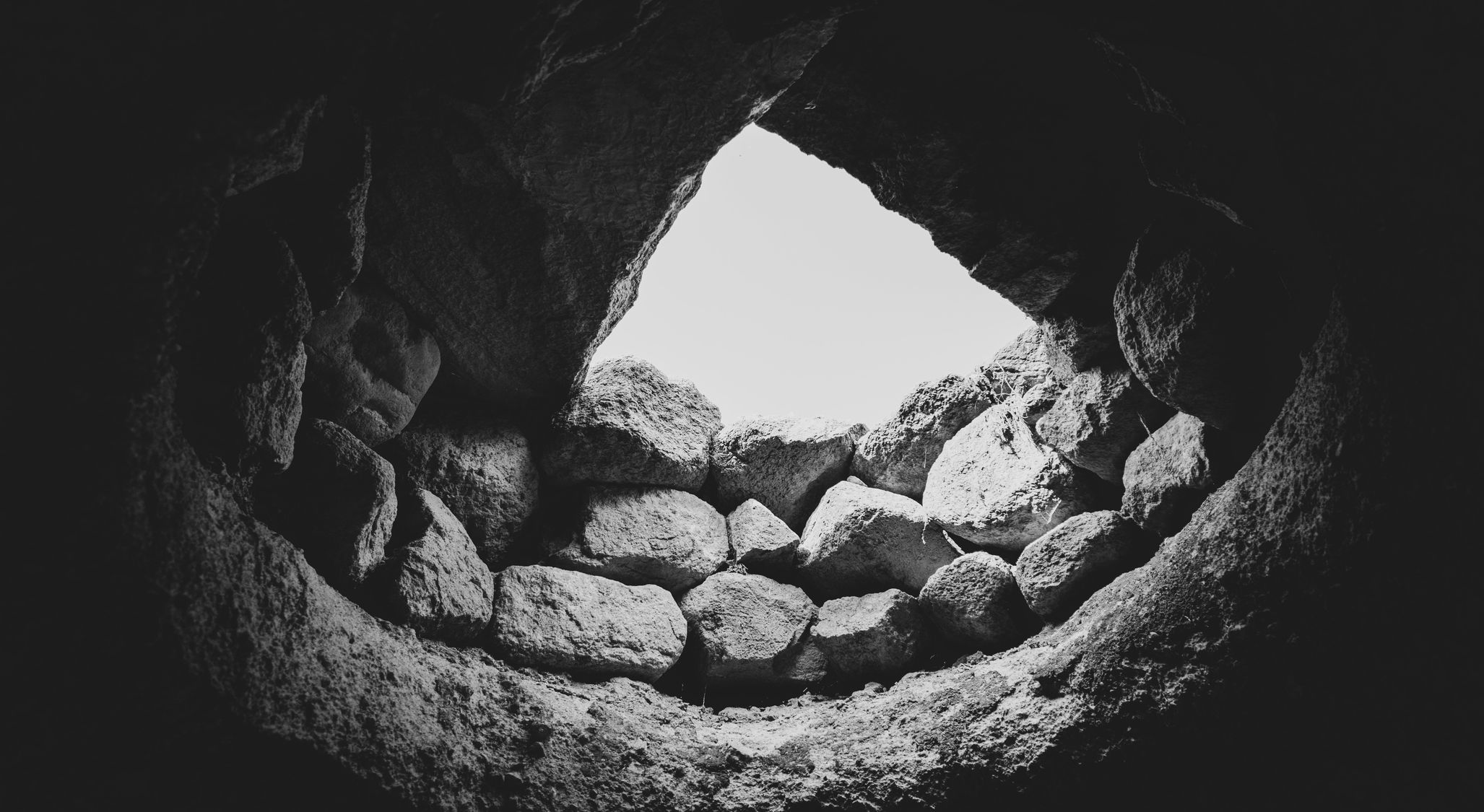
“There is no pit so deep that [God] is not deeper still.”
These words, spoken by Betsie ten Boom to her sister Corrie in the barracks of Ravensbrück (a concentration camp in Nazi Germany), and quoted by Corrie,[1] echo across generations. They remind us that no matter how deep our suffering, God’s love reaches deeper still. And through Corrie ten Boom’s story, we see a living testimony of that unfailing truth.
Corrie ten Boom was born in the Netherlands in 1892. By trade, she was a watchmaker – the first woman in her country licensed to be so. But her true calling was much higher.
Following her miraculous release from Ravensbrück concentration camp, where she was taken with her sister Betsie in 1944, Corrie returned home to the Netherlands. Her life would never be the same but, instead of retreating into bitterness, she set out to proclaim Christ’s forgiveness to a broken world. She travelled to more than sixty countries, telling her story of God’s faithfulness.
Corrie ten Boom’s enduring legacy
Corrie ten Boom’s life is well documented, and her story continues to echo today because it addresses timeless human struggles we all face: fear, grief, injustice and a longing for hope. Her legacy is not measured in accolades or public recognition, but in the lives transformed by her witness of courage, faith, and radical forgiveness, which has resonated across generations and cultures. She demonstrated that ordinary people, anchored in Christ, can shine brilliantly in the darkest circumstances.
The basis for the amazing attributes displayed in Corrie’s life was her unwavering faith in the Lord Jesus Christ and her love of Scripture. It was this shared faith that led to her sister Betsie reportedly commenting to her one day, while they were imprisoned together in the barracks of Ravensbrück: “There is no pit so deep that He [God] is not deeper still”.
Let us now take a deeper look into Scripture to unpack the biblical truths which provided such a firm foundation for Corrie’s (and Betsie’s) faith.
How deep is God’s love?
The life of Corrie ten Boom invites us to ask a question Scripture does not shy away from: How deep is the love of God? Is it deep enough for betrayal? For unspeakable suffering? For enemies who have caused irreparable harm?
The Bible answers with breathtaking clarity.
God’s love is not shallow sentiment or fleeting emotion – it is a love that descends into the darkest places and remains there with us.
Corrie experienced this love, not in comfort, but in a concentration camp. She discovered that God’s love reaches deeper than fear, deeper than hatred, deeper than human cruelty. Scripture tells us that there is no place – physical or spiritual – where His love cannot reach:
“Where can I go from Your Spirit? Or where can I flee from Your presence? If I ascend into heaven, You are there; If I make my bed in hell, behold, You are there”
(Psalm 139:7-8).
God’s love is also sacrificial. It does not remain distant from suffering; it enters into it. At the cross, love bore the full weight of sin and evil so that forgiveness could be offered freely – even to the worst offender.
“But God demonstrates His own love toward us, in that while we were still sinners, Christ died for us”
(Romans 5:8).
God’s love is deeper than human strength, deeper than trauma, deeper than justice alone. It is a love that does not deny evil, but overcomes it. It does not erase pain, but redeems it. And it does not stop at the edge of what feels possible to us.
Corrie’s story testifies to this unshakable truth: there is no pit so deep that God’s love is not deeper still. Scripture confirms it, and her life proves it.
A biblical picture of “the pit”
One of the clearest images of “the pit” in Scripture is found in the life of Joseph.
Joseph’s pit was not only physical – it was emotional, relational, and deeply unjust.
Betrayed by his own brothers, stripped of his identity, and thrown into a literal pit, Joseph experienced abandonment by those he trusted most:
“So it came to pass, when Joseph had come to his brothers, that they stripped Joseph of his tunic . . . Then they took him and cast him into a pit. And the pit was empty; there was no water in it”
(Genesis 37:23–24).
That empty pit represents more than a hole in the ground. It represents rejection, isolation, and the sudden collapse of everything Joseph thought his life would be. Yet, even after being pulled from the pit, his suffering continued. He was sold into slavery, falsely accused, and imprisoned for years – it was another kind of pit, darker and lonelier than the first.
“But the Lord was with Joseph and showed him mercy, and He gave him favor”
(Genesis 39:21).
Joseph’s story shows us that the pit can look like betrayal, injustice, forgotten promises, and long seasons of waiting during which God seems to be silent. Yet Scripture makes one thing clear: God’s presence never left him. Even in the pit, God was working redemption.
Years later, Joseph would look back and see that, what others intended for harm, God had woven into salvation:
“But as for you, you meant evil against me; but God meant it for good”
(Genesis 50:20).
This is the same truth that Betsie and Corrie discovered in the concentration camp – the pit does not mean abandonment. It does not mean God’s love has reached its limit. It is often the place where His faithfulness becomes most visible.
Scripture affirms this again and again:
“He brought me up also out of a horrible pit, out of the miry clay, and set my feet upon a rock”
(Psalm 40:2).
A call for our hearts
Corrie ten Boom died in 1983, on her 91st birthday. But her story lives on, reminding us that the safest place to be is always in the will of God. Her life was not free from loss or sorrow, but it was filled with the radiant presence of Christ.
Her life reminds us that faith is not lived out in comfort, but in courage. She did not know what the future held when her family opened their home to strangers, nor could she have imagined the cost. Yet, in every step of her journey – from the hiding place to the prison cell, from the barracks to the stages – she clung to the truth that God’s love never fails.
Her testimony asks us a hard question: Where is God calling us to trust Him more deeply today? Perhaps it is in choosing forgiveness instead of resentment. Perhaps it is in taking a stand for righteousness even when it costs us. Or perhaps it is in simply resting in the truth that God’s presence is with us, no matter how uncertain the road ahead may be.
Corrie’s story reassures us that we do not need extraordinary strength to live faithfully. We need only to surrender our weakness to the One who is strong. Her legacy is not about what she accomplished, but about what God accomplished through her surrendered life. And that same God is able to work through us today.
“My grace is sufficient for you, for my power is made perfect in weakness”
(2 Corinthians 12:9 NIV).
May the testimony of Corrie and her sister Betsie stir our hearts to trust more deeply, forgive more freely, and live more courageously.
Because truly – “There is no pit so deep that [God] is not deeper still.”
[1] Corrie ten Boom with John and Elizabeth Sherrill (2015 edition), The Hiding Place, p.202.