
My discovery of truth was not based on the opinions or rhetoric of men, but on the Word of God:
“that if you confess with your mouth the Lord Jesus and believe in your heart that God has raised Him from the dead, you will be saved” (Romans 10:9).
“For ‘whoever calls on the name of the LORD shall be saved’” (Romans 10:13).
My decision to trust in Christ for salvation had both present and eternal consequences. The gospel message I heard is rightfully proclaimed to all peoples across the world, regardless of age, language, background or culture, and it continues to transform the life and change the destiny of all who respond positively.
The Lord Jesus made it very clear that the gospel is a message for all and has within it an invitation (elsewhere seen as a command) to trust in Him.
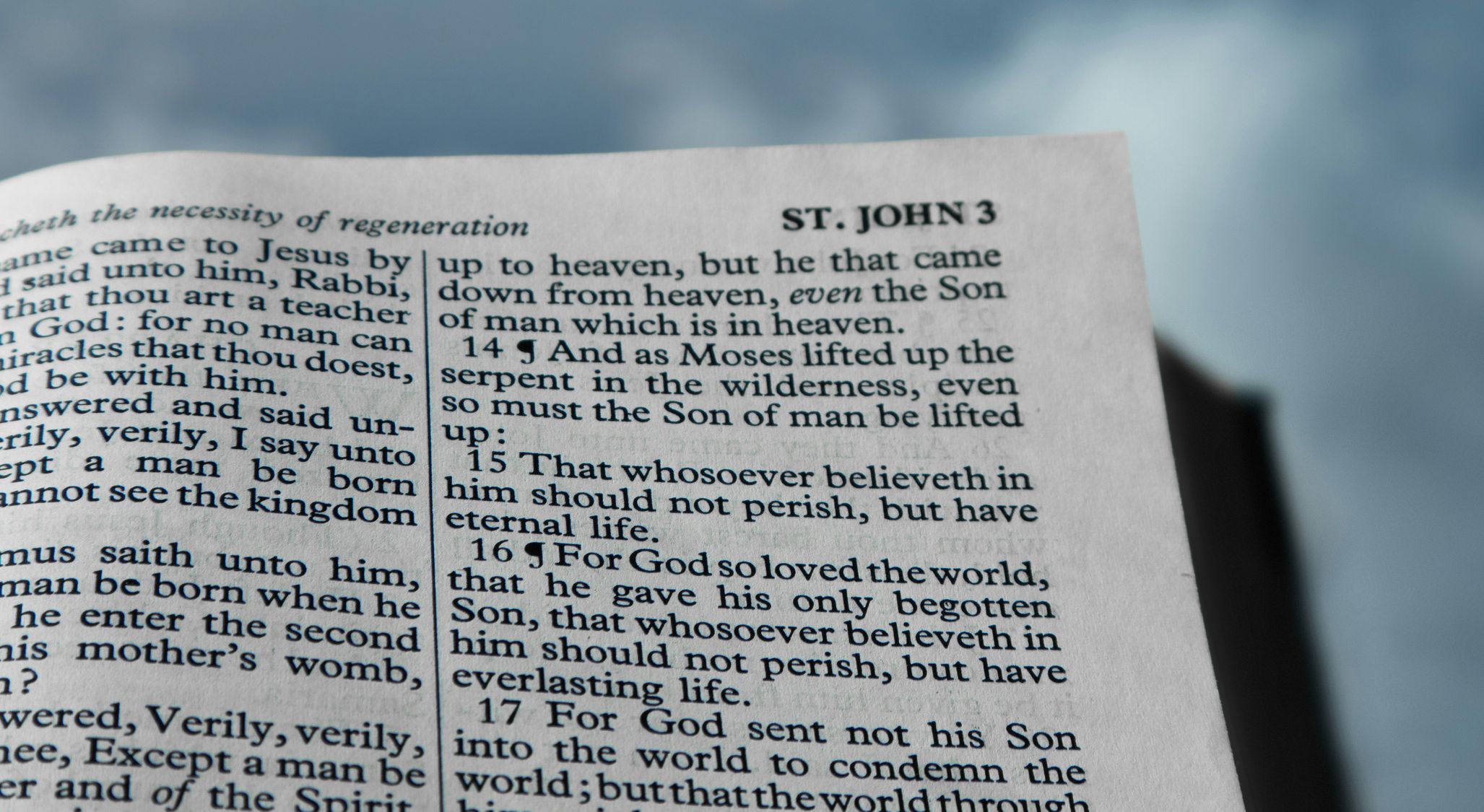
“And as Moses lifted up the serpent in the wilderness, even so must the Son of Man be lifted up, that whoever believes in Him should not perish but have eternal life. For God so loved the world that He gave His only begotten Son, that whoever believes in Him should not perish but have everlasting life” (John 3:14-16).
Although I experienced salvation upon coming to Christ, I subsequently learned, from the Bible, that salvation began in eternity in God’s determined purpose to save a people for Himself.
“Blessed be the God and Father of our Lord Jesus Christ, who has blessed us with every spiritual blessing in the heavenly places in Christ, just as He chose us in Him before the foundation of the world, that we should be holy and without blame before Him in love, having predestined us to adoption as sons by Jesus Christ to Himself, according to the good pleasure of His will” (Ephesians 1:3-5).
“Now when the Gentiles heard this, they were glad and glorified the word of the Lord. And as many as had been appointed to eternal life believed” (Acts 13:48).
This truth was “an eye opener” for me and took some time to understand. But as I studied and meditated on Scriptures that taught the truth of God’s election of individuals to salvation, I was led to worship the One who had graciously chosen me to be blessed with such a great salvation. I learned that this choosing was His sovereign act alone and it was not based on any good in me. In fact, God chooses individuals for eternal salvation even though they are, by nature, sinners who reject Him and possess nothing that merits it.
Many other verses confirm this great truth. For example:
“But we are bound to give thanks to God always for you, brethren beloved by the Lord, because God from the beginning chose you for salvation through sanctification by the Spirit and belief in the truth” (2 Thessalonians 2:13).
"For many are called, but few are chosen" (Matthew 22:14).
The existence of so many texts such as these means the biblical teaching on election cannot be ignored. Rather, it should be believed, embraced and studied, resulting in worship of the Lord God.
Is election conditional?
Some people argue for what is called “conditional election”. This means that God bases His election of an individual on His foresight of whether that individual will have faith in Christ. This concept destroys the very meaning of the word election as God just endorses man’s choice. If God looked ahead through the corridors of time and chose people on the basis that they would choose Him, the doctrine of election would have to be renamed the doctrine of divine reaction or response, as God would be reacting to what He saw people would do.
Some of this confusion has arisen because of the word translated “foreknowledge” in Peter’s first letter.
“Peter, an apostle of Jesus Christ, To the pilgrims of the Dispersion in Pontus, Galatia, Cappadocia, Asia, and Bithynia, elect according to the foreknowledge of God the Father, in sanctification of the Spirit, for obedience and sprinkling of the blood of Jesus Christ: Grace to you and peace be multiplied” (1 Peter 1:1-2)
When considering this verse it is extremely helpful to understand that the same Greek word is used to describe the Lord Jesus.
“He indeed was foreordained before the foundation of the world, but was manifest in these last times for you” (1 Peter 1:20).
In both verses, the word clearly refers to a predetermined relationship within the knowledge of God; individual believers are foreknown (v.2) for salvation, just as Christ was foreordained (v.20) before the foundation of the world to be a sacrifice for sins. God did not look forward in time, see what would happen to the Lord Jesus, and then choose Him as the sacrifice for sin and the Saviour of the world. Foreknowledge means that God planned in His sovereignty, not that He observed first and then planned.
Is election corporate?
Corporate election is the idea that God did not choose individual people; rather, He chose Christ – and since Christ is the chosen One, all who come to Him in faith are part of the chosen group.
Many proponents of this view contend that just as, in the Old Testament, election was ultimately of a nation (Israel) so, in the New Testament, election is of a body (the church), not of individual believers. For them, the objects of God’s sovereign choice are Christ and the church, which is His body (Colossians 1:24), and believers come into election blessings because they become “in Christ”, part of that body.
It is true that God sovereignly chose Christ to carry out the work of redemption (Isaiah 42:1-4). Further, as we have already noted from Ephesians 1, all true believers are “in Christ”, but their election to salvation is individual. Romans 9 provides the most detailed exposition of God’s election of individuals to salvation:
“As it is written, ‘Jacob I have loved, but Esau I have hated.’ What shall we say then? Is there unrighteousness with God? Certainly not! For He says to Moses, ‘I will have mercy on whomever I will have mercy, and I will have compassion on whomever I will have compassion’” (Romans 9:13-15).
So God’s election of sinners took place before the world was made (Ephesians 1:4) – it is unconditional and individual.
Paul writes to the Thessalonian believers stating that God chose them not only for salvation but also as among the first to respond to the gospel. That statement does not fit into a doctrine of “corporate” election.
“But we are bound to give thanks to God always for you, brethren beloved by the Lord, because God from the beginning chose you for salvation through sanctification by the Spirit and belief in the truth” (2 Thessalonians 2:13).
Furthermore, the natural way to read John’s second letter is to see the recipient as an elect individual along with her family, and to note the reference in it to her sister as another elect individual.
“The Elder, To the elect lady and her children, whom I love in truth, and not only I, but also all those who have known the truth” (2 John 1)
“I rejoiced greatly that I have found some of your children walking in truth, as we received commandment from the Father” (2 John 4).
“The children of your elect sister greet you. Amen” (2 John 13)
Is election comforting?
Election is a subject that can seem painful; instead, it should cause the believer to glorify God, to worship Him for His amazing grace, to forget any thoughts of self-worth and have confidence in evangelism.
God would have been just if He had left every single person under condemnation for their sins and destined for hell. Undeniably, we deserve nothing but eternal damnation, but God graciously chooses some to inherit eternal life. This choice is not based on His foreknowledge of anything in us – least of all our faith – but solely and unconditionally on the good pleasure of His merciful will (Ephesians 1:5). This is amazing grace that comes at an immeasurable cost – the death of His beloved Son.
It is important to emphasise that God did not choose from among the innocent whom He would save and whom He would damn. God chose from among the wicked those He would save, leaving the rest to a just and righteous condemnation. The Scriptures clearly teach unconditional and individual election unto salvation, but they do not teach an election unto damnation.
Paul, when writing to the Corinthians, reminds them that God is the initiator of salvation and there are no grounds for boasting. Believers should constantly guard against any thoughts that they are “in Christ” because of something meritorious or worthy in them:
“But of Him you are in Christ Jesus, who became for us wisdom from God – and righteousness and sanctification and redemption – that, as it is written, ‘He who glories, let him glory in the LORD’” (1 Corinthians 1:30-31).
Some people have postulated that belief in God’s individual unconditional election to salvation, makes preaching the gospel unnecessary since the elect will be saved anyway. Thoughts like this should be repented of and cast from our minds. The command of the Lord is to go and preach the gospel (Mark 16:15). Not only has He determined who will be saved, but He has also given the means by which they will come to Him. As obedient servants of the Lord we must do what He has commanded us to do, yet we must look to Him to do what only He can do.
A cursory look at the history of missions reveals that many evangelists who were mightily used by God wholeheartedly believed in unconditional election of individuals as taught in this article. David Brainerd, John Bunyan, William Carey, George Whitfield, George Muller and Charles Spurgeon are just a few well-known names who embraced this comforting truth.
When Paul was in the deeply immoral city of Corinth, he received a word of comfort and exhortation from the Lord:
“Now the Lord spoke to Paul in the night by a vision, ‘Do not be afraid, but speak, and do not keep silent; for I am with you, and no one will attack you to hurt you; for I have many people in this city’” (Acts 18:9-10).
There were many people in the city who, having been chosen by the Lord, through the preaching of Paul would be brought to faith and ultimately saved.
Our Lord Jesus also gave a great promise concerning those chosen by God:
“All that the Father gives Me will come to Me, and the one who comes to Me I will by no means cast out” (John 6:37).
This verse makes clear that every single chosen one will come, while at the same time affirming that no one who comes to Christ will be cast out.
The glorious truth of God’s sovereign election guarantees that those He has chosen will respond to His Word with true faith and repentance. The Bible teaches that God has elected certain individuals to salvation, and it also teaches that each person is responsible to accept the gospel.
May we rejoice that “Salvation is of the LORD” (Jonah 2:9) and give Him all the glory.