
Regardless of whether we like it or not, the fact that there is a place where people who have rebelled against God will be eternally banished from His presence is a truth consistently taught in the New Testament. In this article I want to look at one specific occasion when the Lord Jesus Christ speaks about such a place, and what he tells us about it.
The Parable
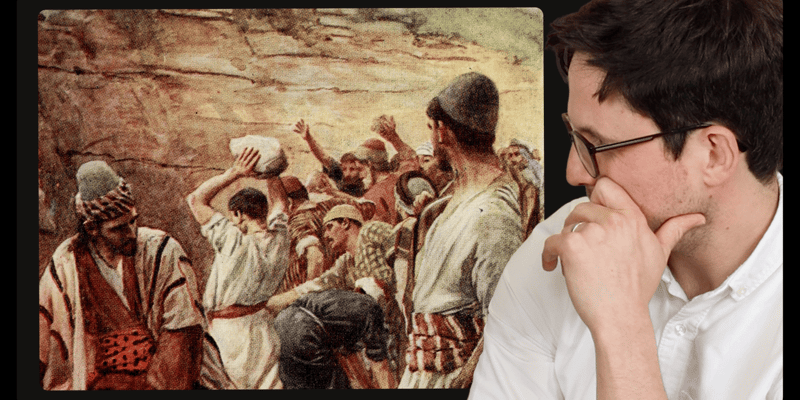
In Luke 16:19-31, the Lord Jesus tells of two men who were contemporaries, both in life and in death (v.22). When Lazarus, who is described as a beggar, dies, heaven takes a special interest; he is carried by angels into the company of Abraham, who “was called a friend of God” (James 2:23 ESV). The other man experiences a fate at the opposite extreme. When this man, who remains nameless, closes his eyes in death, he finds himself in a place that the Bible calls hell (v.23 KJV), or “Hades”.
The Pain
In my experience, the idea that most people have of hell is that it is a place of pain. While sometimes mischaracterised or caricatured, the reality of hell as a place of pain is exactly where the Lord Jesus begins in describing this man’s fate. In vv.23-24 (ESV) the man is described as “being in torment” and “in anguish in this flame”. There is no hyperbole or gratuitous description of what is happening to the man; neither is the reality of his situation sanitized in any way. When the man looks up he has one simple request: “Father Abraham, have mercy on me, and send Lazarus to dip the end of his finger in water and cool my tongue, for I am in anguish in this flame” (v.24). In the unquenchable flame of the judgement of God this man calls out for leniency and discovers that he is forever too late.
The Partition
When the rich man calls out to receive water, two reasons are given why that is not possible. The first reason is that, despite all the good things he received in his life, the choices he made on earth resulted in eternal separation from the God who had given him these good things. Lazarus, on the other hand, despite the difficulties he endured, chose to obey God, and his choice resulted in eternal life. We do not know all the decisions that led to this point, but we do know that Lazarus made the decision to believe God, and the rich man did not. “He who through faith is righteous shall live” (Romans 1:17 RSV). The second reason given is that once a person has passed from time into eternity, their destination is eternal and immovable. Abraham says: “And besides all this, between us and you a great chasm has been fixed, in order that those who would pass from here to you may not be able, and none may cross from there to us” (v.26 ESV). The teaching is clear – there is no possibility of moving from the one place to the other, nor does Scripture mention any interim place from which a person may “graduate”. The only space between the two destinations was a “great chasm” established by the righteous standards of God.
The Priority
With no hope of relief from the torment, and a dawning realisation that there is no possibility of ever leaving this place, the rich man begins to understand that others need to be warned. In verses 27-31 we hear him pleading that Lazarus, if he cannot come down to cool his tongue, be sent to warn his five brothers. It seems that these men have had the same experiences and opportunities as their deceased brother but, sadly, they have made the same choices. God had not left them without warning though, for Abraham rightly points out that they have access to the Old Testament. Here, the warning sounds clearly that those who are unrighteous have stored up for themselves “shame and everlasting contempt” (Daniel 12:2b ESV). The rich man pleads that, although his brothers have not listened to the warnings up to this point, if someone were to rise from the dead, they would listen. It seems plausible to our minds that such an event would change their outlook, but Abraham concludes: ‘‘If they do not hear Moses and the Prophets, neither will they be convinced if someone should rise from the dead” (v.31 ESV).
The Present
I have often wondered about the great privileges afforded to the man in our story who found himself in hell. Having considered his awful plight, I believe his greatest torment must have been to remember those occasions when he heard the Word of God. Today, as you read this article you have an opportunity to consider where you will be in eternity, and to ensure that it is not that place of torment.