
“And we know that in all things God works for the good of those who love him, who have been called according to his purpose” (Romans 8:28 NIV).
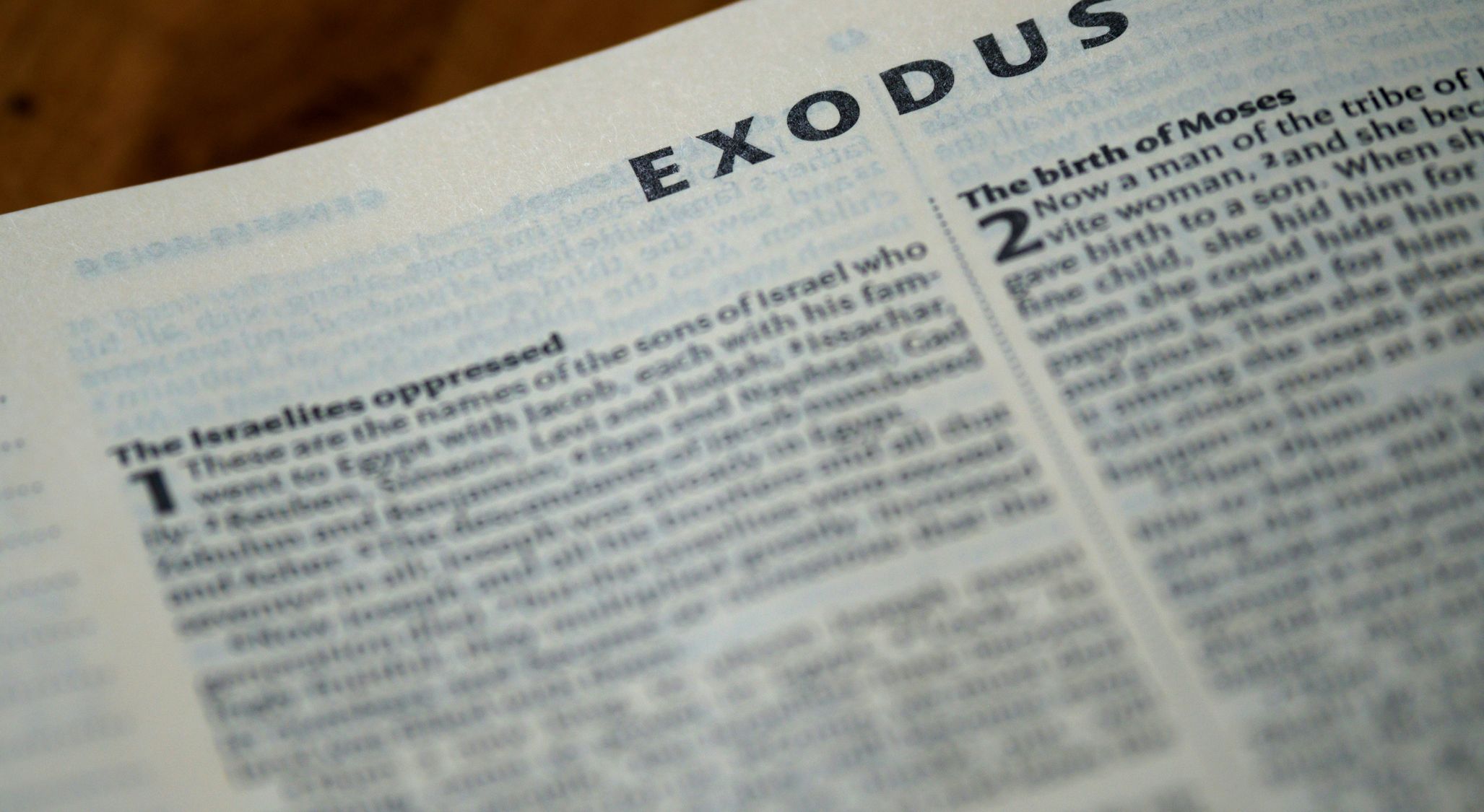
Before God asked Moses to lead his people through the different segments of the exodus narrative, he gave him his own experience of each chapter ahead of time. Moses had lived through the variation of every phase the Israelites would encounter, and he could reassure them that the unexpected twists and turns, and the innate variation of their experiences as the Lord brought them out of Egypt, were all part of the great story God was writing, and God would work it together for good.
Phase 1: Crisis (Exodus 2:11-15)
Moses started out in a favoured place. He grew up in Pharaoh’s palace, fortified by his mother’s Jewish teachings, grounded in his Jewish heritage, with a foundational belief in the one true God.
But one day, all of that changed. The tension between Moses’ Egyptian position and his Jewish identity led to an impulsive defensive action that lost him favour with the Egyptians, and with his own people. Pharaoh was livid that Moses had defended his own people at the expense of an Egyptian life and Moses knew this meant he was no longer a family favourite. Instantly he traded in his fame for outlaw status. This crisis required him to leave all he had ever known and run for his life.
This is that moment when the tables turn, and life goes awry, despite all the good intentions in the world. A premature moment of passion for the injustice of his brothers lands him in a place of rejection and danger. The threat of death from the enemy, the lack of protection from his own . . . here is the crisis and pain that turns life upside down and asks for a way through that will inevitably create a new normal. Life will never be the same, will it? But with the God who does not change, even this can accomplish His good purpose and work together for the good of those who love Him.
Phases 2 and 3: Deliverance and the Wilderness (Exodus 2:16-25)
Somehow Moses escaped Egypt undetected. After a quick sigh of relief, however, it was time to look around.
Where did he find himself now? Not surprisingly, Moses ended up in the middle of nowhere. His task? Looking after sheep. From favoured royalty to a despised shepherd. From notoriety to obscurity. From a place of leverage to a place of invisibility.
Even here, though, God was preparing Moses to lead His own people who would prove to be a rebellious and trying flock. He was developing in Moses a meek character, one that would know how to intercede for others, that would not seek its own fame and acclaim, that would live for the good of others. Here God gave Moses experience with shepherding, as well as a wife and children, and a wise father-in-law.
After a while, Moses may have settled into this place. Less limelight, well-defined demands, a cosy family. All that high-and-mighty Egypt stuff behind. And those enslaved brothers of his didn’t want him anyway. God could use someone else to rescue them. Moses had been there, done that, got the T-shirt.
Phase 4: The Call to Move Forward (Exodus 3:1-4:17)
But there came a day when all of that changed and Moses received a call that he just could not ignore. Just a regular day with the sheep when a bush lit up and would not go unnoticed. An encounter with the God of Israel, and a call to a work that would require sustained obedience and faith and courage, with freedom and a promised land waiting on the other end. God was asking Moses to be a willing instrument in His hand so that He could use him to free His people, and put His glory on display for all the world to see.
Unnerving? I think so.
What exactly was God asking Moses to do? Go back to Pharaoh? Really? The ruler of a nation he had angered to the point of death not so very long ago? Save the Israelites? Really? The people that had told him in not quite so many words that he was not the saviour they were looking for? And what of all that had elapsed while he had been with these sheep in the wilderness? A place where the eloquence had faded, the confidence had slipped, and the popularity and fame had evaporated. This task sounded impossible to Moses. It seemed that God had picked the wrong person. And he told God so. But God was not to be put off. This was His call, for His man, and He was not going to take no for an answer.
So, despite the intimidating task, Moses stepped forward and headed back to the place where God had told him he was needed.
Phase 5: A Great Work Accomplished to the Glory of God (Exodus 4:18-12:42)
Surely it would be smooth sailing from here. Moses had been quite unabashed at airing his hesitations, and God had assured him this was the plan. Things would surely fall into place without any hiccups, Moses would gain hero status, and the Israelites would finally break free from Pharaoh. Right?
No. Even here, in this place where Moses was sure God wanted him to be, the obstacles mounted. The feeling of déjà vu must have overwhelmed Moses at times. Not again. An obstinate Pharaoh, an irate house of brothers, and increased hardship along with plague after plague after plague. Second thoughts and self-doubt just below the surface. Did God really mean to accomplish this great victory in this way? Must it always be so costly for the man He has called to do it?
And again we find that this is God’s way. There was no room for pride to grow here, or self-reliance. All of the unfolding events that led up to the exodus nurtured patience and faith, and turned all eyes to God. By the end of the contest with Pharaoh, Moses had faded into the background and God was at the fore, gloriously displaying His power and plan to all of Moses’ disillusioned brothers. Moses was right where God wanted him to be. And God was right where He needed to be in order for the Israelites to believe in His might and follow His lead.
Indeed, as the Israelites walked off with the Egyptian spoils, Moses could say with conviction that through all the difficulties, through all the ups and downs, through all the varying phases of his story, God had surely worked it all out for his good and God’s own glory. God was the one who had accomplished the great work of deliverance using a human instrument that was willing in His hands.
Moses began that long trek out of Egypt, through the sea, across the wilderness, to the banks of the Jordan, overlooking the Promised Land, with the perspective of someone who had travelled this way before. He knew that no matter where God leads, no matter what obstacles loom, no matter the variation from one place to the next, the constant is that there is a God who is present and powerful, and He will have His way.
And God asks us, like Moses, to put ourselves in His hand as willing instruments to accomplish His will on this earth. We can expect the way to be diverse and difficult, but we can also know that the God whom we serve is in control, and He will ultimately work it out for our good and His glory.