
Celebrating all of that came so naturally. That was a joy-filled moment. But what next?
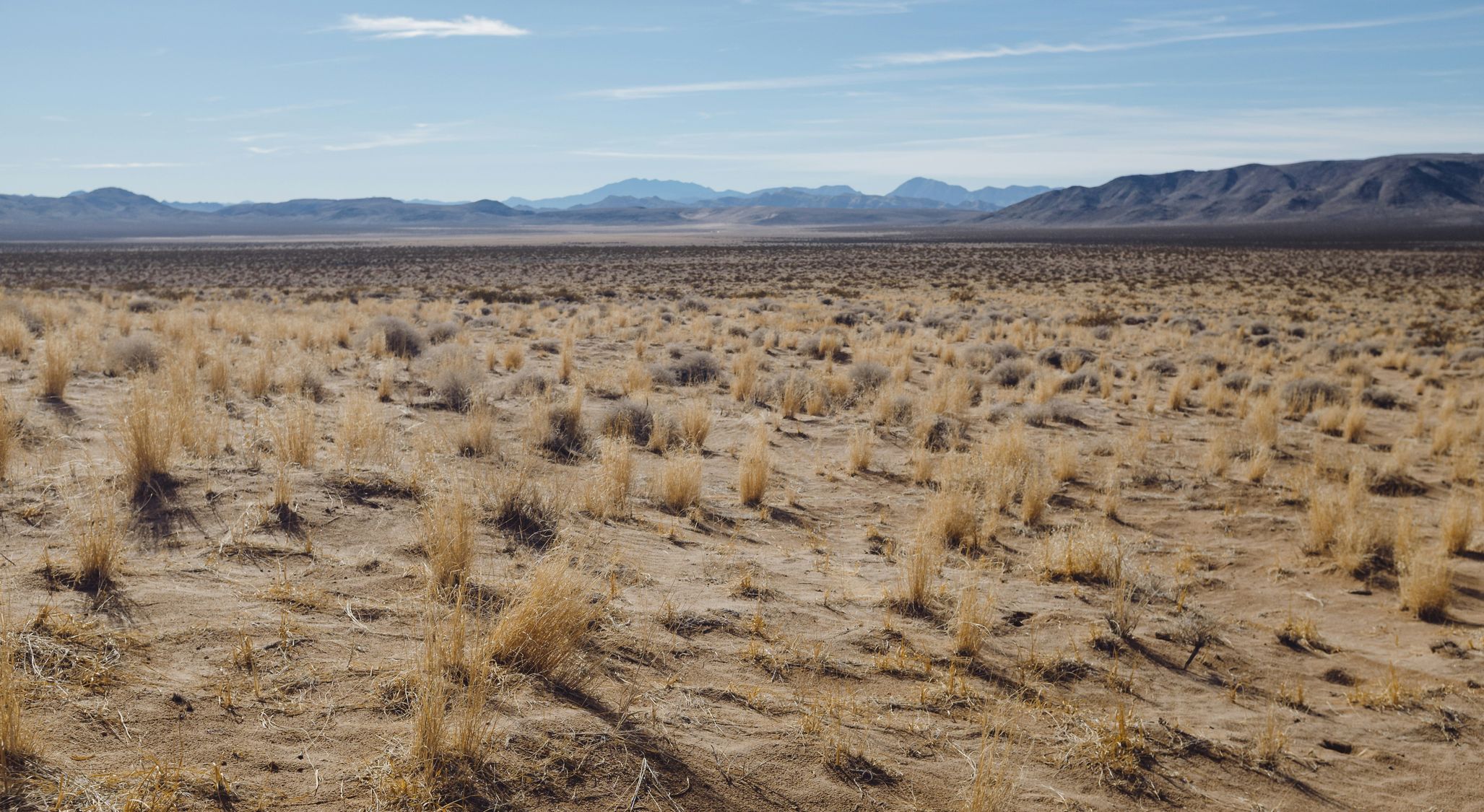
Now the wilderness stretches out ahead – a bleak, unending landscape. There is a sense of need, of obscurity, and of discontent. This feels like an in-between – just putting in time until the real action begins. But is it?
Transitions are like this phase of the Exodus story. The unsettled feeling of leaving what is familiar (even if it was terribly uncomfortable) and not yet being settled with a new normal, often leaves us wandering and wondering like the Israelites, unsure of ourselves and everything around us.
So what is the purpose of our wilderness times?
The wilderness is where God proves us and we prove Him. He allows us to hunger and thirst as we move from one camp to another. Whether we ask in faith or complain in anger, He provides for us consistently and miraculously. In this way we learn, like the Israelites, that “man does not live on bread alone but on every word that comes from the mouth of the LORD” (Deuteronomy 8:3). In some ways the wilderness strips away all the excesses that we might be tempted to lean on for security, so that instead we tether ourselves to the God who provides, and learn to long for Him.
Need
In Deuteronomy 8:2-5 (NIV), Moses tells the Israelites:
“Remember how the LORD your God led you all the way in the wilderness these forty years, to humble you and test you in order to know what was in your heart, whether or not you would keep his commands. He humbled you, causing you to hunger and then feeding you with manna, which neither you nor your ancestors had known, to teach you that man does not live on bread alone but on every word that comes from the mouth of the LORD. Your clothes did not wear out and your feet did not swell during these forty years. Know then in your heart that as a man disciplines his son, so the LORD your God disciplines you.”
It is striking that in this text God takes responsibility for the acute hunger the Israelites experienced in the wilderness, declaring that He caused them to be hungry and that He provided what they did not even know existed – He was training them to think beyond the physical so that they would look to Him for sustenance.
All that once fed them in Egypt – the leeks, the garlics, the onions – had disappeared (Numbers 11:5). Instead, there was barrenness all around, and they were required to depend on God to miraculously provide meat and bread.
But this new God-given diet of manna did not seem quite as good as what they remembered eating in Egypt. Less flavour. Less variety. Not what they had always known and were wishing they still knew. How was it so easy to remember the food and forget the slavery? Was it really possible to paint over the pain with a longing for the sensual? And so God says: “No, I am disciplining you away from that into something spiritual and miraculous. Can you appreciate the provision? Can you see that even though it may not be showy and flavourful, this is enough because it comes from Me? I will give you what you need, even here, but not always everything you want. Learn to be thankful when what you get is different from what you are longing for, something you did not even know existed. Trust that it is from Me and it is exactly what you need.”
What was familiar in the land of slavery had given way to something new and different. Would they rather have familiar flavourful food with slavery, or unfamiliar miraculous abundance with freedom?
Obscurity
But the food was not all that was unfamiliar. This place required a completely different way of life – another test of what was in the heart.
Slavery was all the Israelites had ever known. They were used to being driven by the taskmasters of Egypt. For hundreds of years they had been pushed and prodded and punished, while performing the will of a tyrant. This performance-based lifestyle had now given way to freedom. No one was driving them, evaluating their actions and deciding their worth. Suddenly, they were living without an antagonistic audience. Suddenly, they had room to breathe and to choose. After all, no one was watching. Well, no one with a whip, anyway!
And it is in places of obscurity like this that our hearts and motives are tested, revealing who, or what, we truly serve. Who are we without a physical audience? What motivates us when no one is evaluating our work or threatening us with a whip? When we are free from the will of the tyrants around us, what is our own will, and how does it align with God’s will? If no one is watching, why should we do anything at all?
But all this talk of no one watching is delusional. Even in the wilderness – where the Egyptian evaluators are gone, and there doesn’t seem to be an audience to perform for – God is interested in every action of every heart. In fact, the freedom of each heart to follow and obey Him – or not – is a test of huge significance to Him. If God desires a love freely given, this atmosphere of obscurity is the most conducive place for it to be demonstrated.
So what does a heart that loves and follows God, even without the threat of a whip, even in obscurity, do? It obeys. It worships. It plods faithfully for God’s eyes alone. It blesses those around it. It gives thanks – even here, even for this. And it is content to be an honourable nobody that glorifies the Lord in simplicity. There is no need for fame or acclaim – just a steady path of faithful obedience and thanksgiving.
Jeremiah 45:5 (KJV) has a good word for us in this regard: “Seekest thou great things for thyself? seek them not.” And in 2 Samuel 7, when David told God he wanted to build Him a house, God said, “No, I will build you a house”. The wilderness is where we can put aside seeking great things for ourselves and be content to let God build us a house. It is about getting from point A to point B in a way that honours God, without the distraction of seeking applause and approval.
Discontent
But could the Israelites have fast forwarded this phase and rushed from the celebration by the Red Sea to the parting of the waters on the banks of the Jordan? Who really wants to stay in a place marked by wandering – continually setting up camp and taking it down – with no lasting or permanent works of physical significance, a bleak and barren in-between place, with all the promises of paradise somewhere up ahead? Was this not a waste of time? Would rushing through this part not put them further ahead in their spiritual pursuits?
And here, yet again, timing presents another test. You see, this is not our decision to make. “Timing is [God’s] business” (Acts 1:7 MSG). In the wilderness, the Israelites’ pace, progress, and path were all determined by God. He had provided a cloud for this very purpose, and they moved only when the cloud moved. The length of time spent in each place, whether a day or a month or a year, was irrelevant (Numbers 9:17-23). What mattered was that they followed the cloud. Indeed, God’s presence with them was more important than how much visible progress they made.
When we are tempted to strain ahead, the wilderness asks us to rest under the cloud and trust that God is with us. He will tell us when it is time to move.
But then, of course, we always have the choice of whether or not to obey.
Perhaps this was most obvious at Kadesh Barnea (Numbers 13:17-14:10). Though they had clear direction to go, the people refused to obey God and possess the Promised Land. This resulted in God using the wilderness as a consequence. Prior to this event, the people were where God had intended them to be, learning the lessons that would serve them in the next phase of their journey. Now, however, they were required to stay in this place due to their wilfulness and disobedience, wandering in futility for the rest of their earthly lives.
In contrast to these wilful and disobedient people at Kadesh Barnea, Caleb and Joshua alone were eager to go when God commanded, confident that God was on their side. Yet, even in their case, through no fault of their own, they spent thirty-eight extra years wandering in the wilderness until all their faithless companions had died. The difference was that, amazingly, and with the Lord’s miraculous preservation, they emerged with their character and confidence undiminished, still eager to take the land (Joshua 14:6-15). The Lord’s plan for them was not over. Life still stretched ahead with the prospect of accomplishing what God had asked for from the start, all in His good time.
Being in the wilderness is a God-ordained part of the Exodus story. But staying in the wilderness until death was never God’s intention, and came as a consequence. It is a warning we should heed. If we find our wilderness stay is a result of our own wilfulness and disobedience, it is time to repent and seek mercy from God in order to find a way back to Him and His will.
However, despite this reality, we learn from Joshua and Caleb that the wilderness experience is not necessarily a consequence. It can be a God-ordained part of God’s plan for us. And it can drag on longer than we expected at times, based on circumstances beyond our control. Perhaps you feel you have been circling around in this part of your story much longer than you would like. Perhaps it is through no fault of your own. Take heart and be at peace. God is accomplishing His purpose in and around you, even here. Surrender to His timetable and follow His lead.
In Good Company
So, on the day you look around and realize you are in the wilderness, first take stock to establish whether you find yourself here by God’s design or by your own wilfulness. If you find you are here by God’s design, take a deep breath and smile. Rest assured that God has led you here, and He is with you. This season is not the end of your story, but it is a valid chapter. Settle in and live it out to the glory and pleasure of God with thankful, humble, and obedient faith. Faith is always what God is looking for in every phase of your story, and the wilderness provides ample opportunities for it. Remember that God’s most effective servants followed this road, encountered its temptations, and left an inspiring trail for us to follow.